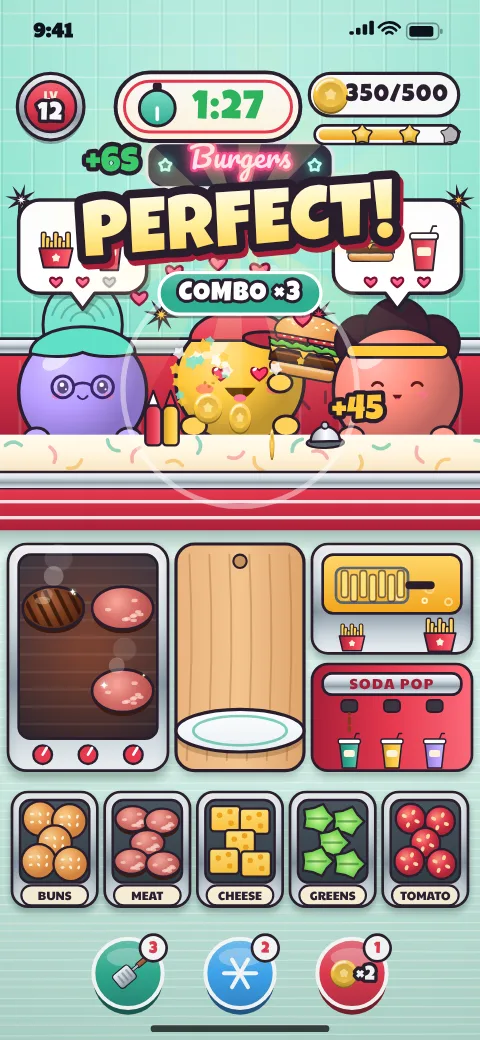
Why cooking games overload on content
Cooking ideas grow by adding food, and food feels cheap to add. One more topping, one more drink, one more dessert. Each addition looks like a single item on a list, but it lands in four places: art for the raw and cooked states, a station rule, new recipe combinations, and level design that uses it. Ten small additions can double the testing of a game without anyone deciding to double it.
The answer is to count the content in one table before the build starts and treat the table as the scope. The cooking cost guide covers what each package costs; this guide is about filling in that table so the package you pick can hold your game.
The recipe, order and station matrix
Stations go down the side, recipes across the top. A mark means the recipe passes through that station. Read across a row to see how busy a station is; read down a column to see how many steps a recipe takes. The example below is a one-diner scope modeled on our example cooking concept.
| Station | Plain burger | Cheeseburger | Tomato burger | Fries | Burger + fries | Soda |
|---|---|---|---|---|---|---|
| Grill (patty) | Yes | Yes | Yes | Yes | ||
| Board (bun, cheese, tomato, lettuce) | Yes | Yes | Yes | Yes | ||
| Fryer (fries) | Yes | Yes | ||||
| Soda fountain | Yes | |||||
| Steps to serve | 2 | 2 | 2 | 1 | 3 | 1 |
Orders are combinations of recipes. With six recipes and orders of one or two items, there are already more than 20 distinct orders. That is plenty for a first release, because difficulty comes from speed, patience timers and how many customers wait at once.
| Add | Art | Rules | Recipes and orders | Testing |
|---|---|---|---|---|
| One topping (for example bacon) | Raw and cooked sprite, order-bubble icon | Grill timing, burn state | Two or three new burgers, many new order combinations | Every level that can request it |
| One station (for example a dessert counter) | Station art, animation, upgrade card | Its own timer, capacity and upgrade ladder | A new recipe family | Balancing against the other stations and the upgrade economy |
| One restaurant | Kitchen layout, customers, decor, music | New stations and patience rules | A new recipe list | A new difficulty curve; this is Advanced scope |
The single-loop demonstration
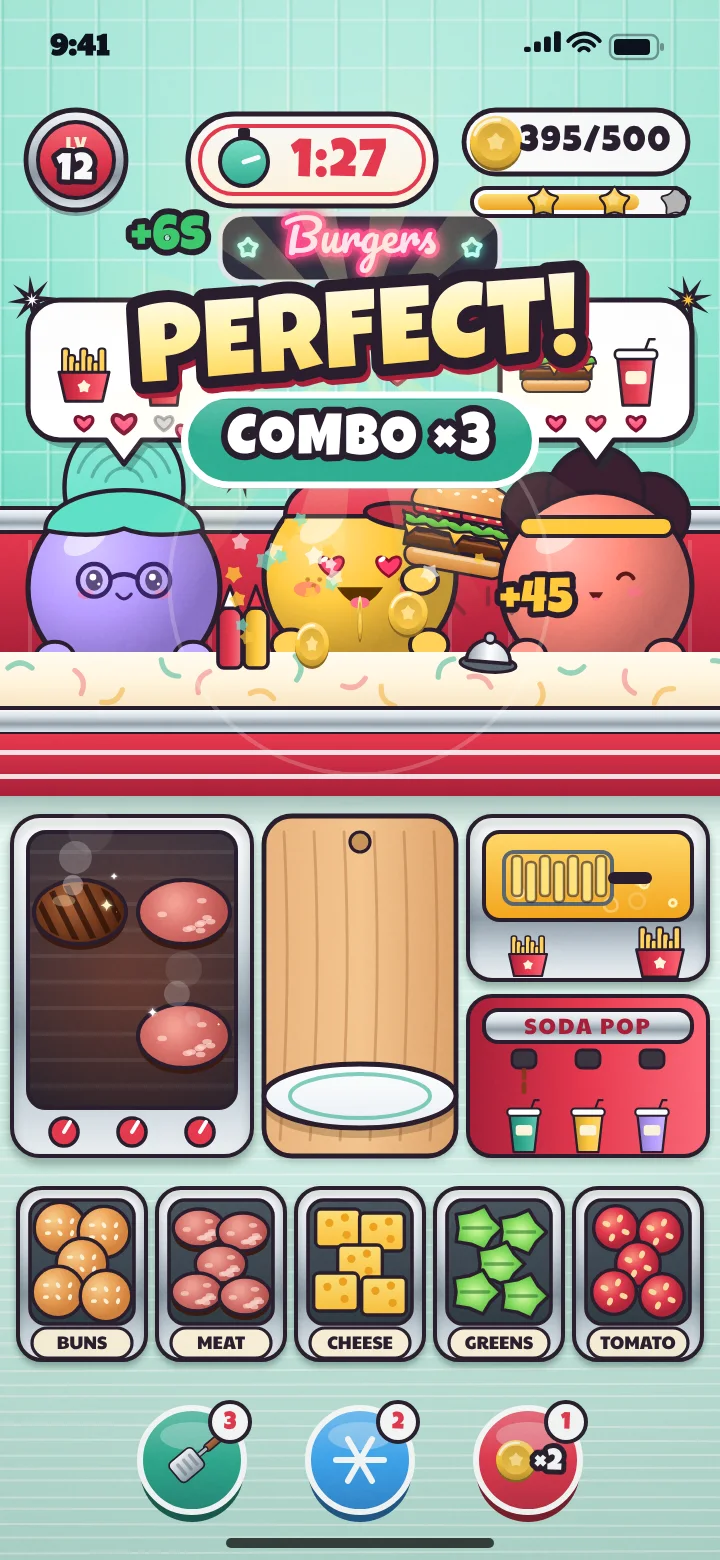
Before any extra food goes in, ask to see one order loop working at final feel. In our example concept the first serve lands in under ten seconds: one customer, one burger. On a Core build, the playable loop arrives at the prototype checkpoint around days two to three, which is the right time to judge it.
What the single-loop demonstration should show
- A customer arrives with an order bubble you can read without zooming.
- Tapping or dragging moves an ingredient to a station, and the station shows progress.
- Overcooking is possible and visible, with a way to recover.
- The plated dish goes to the customer, who reacts with a mood change and a tip.
- The patience timer runs out on a customer you ignore, and the game shows the cost.
- Coins from the level buy one station upgrade that makes the next level noticeably easier.
- The loop runs on your smallest supported phone with every element readable.
A scope ladder from one loop to a food town
| Step | Content | Package fit |
|---|---|---|
| 1. One loop | One diner, 3-4 stations, a short ingredient list, a handful of recipes, levels with star goals | Core Game, $499, or Core Game + Launch, $1,299 |
| 2. Deeper kitchen | The same diner with more recipes and an upgrade ladder per station | Usually still Core if the recipe list is agreed in the blueprint |
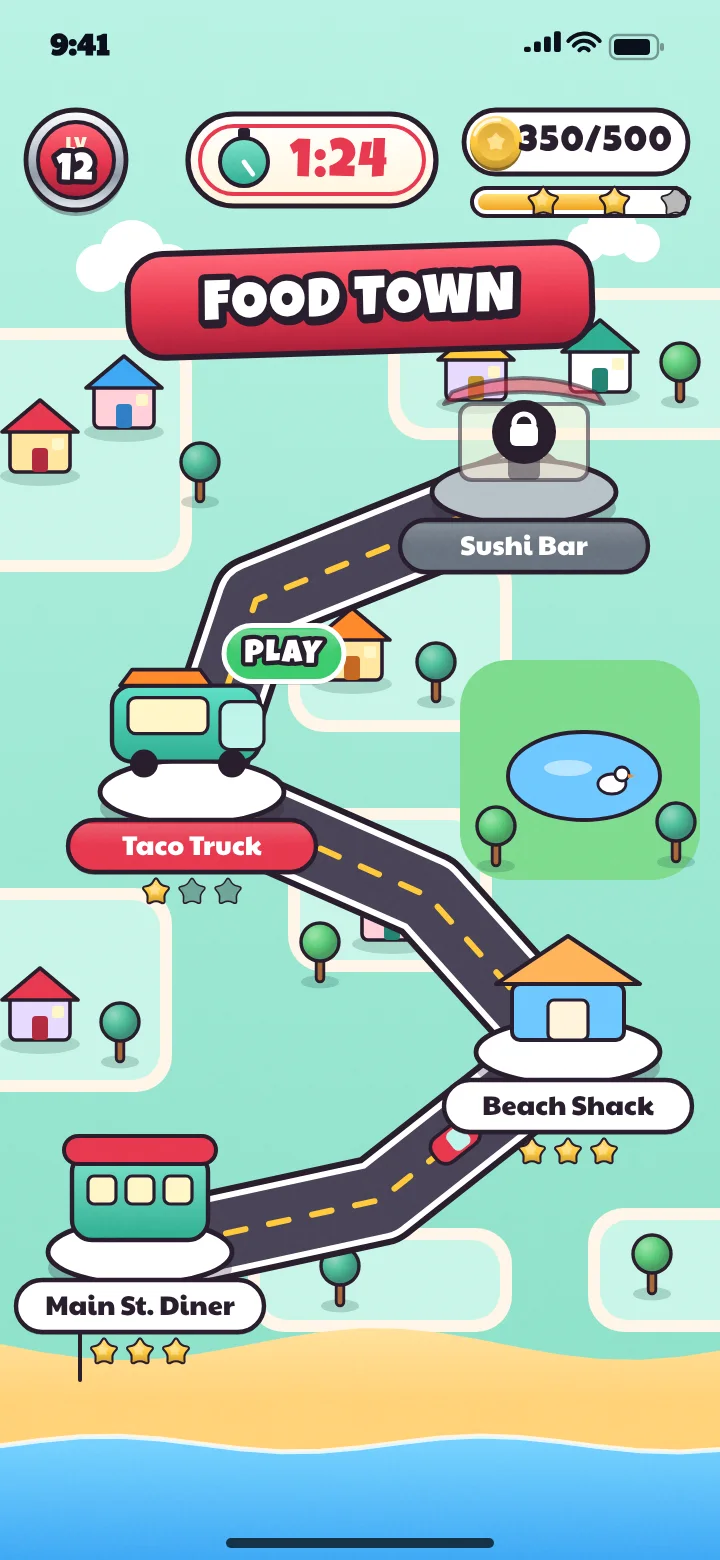
| 3. Second location | A new restaurant with its own stations and recipes, joined by a map | Advanced Game + Launch, $2,999 |
| 4. Food town | Several locations, recipe trees, staff, events | Advanced if bounded in the blueprint; ongoing seasonal content is quoted separately |
Putting the matrix in your brief
Attach the filled-in matrix to your brief and mark which recipes and stations are launch content and which are a wish list. At kickoff the scope is confirmed in a written blueprint; refinements inside it are unlimited until first submission, while new stations, recipe families or restaurants after approval are scope changes. If the matrix turns out bigger than your package, you can trim it, upgrade for the difference, or take a full refund.
The mobile game brief template has room for the matrix alongside audience and monetization. To see the full example concept, including its art direction and first minute, visit the cooking rush concept page.
Frequently asked questions
How many recipes should a first cooking game have?
Enough to make varied orders from a short ingredient list; six recipes in one or two-item orders already produce more than 20 distinct orders. Difficulty can come from speed and customer count instead of new food.
What is a recipe and station matrix?
A table with stations down the side and recipes across the top, marking which station each recipe uses. It shows how busy each station is and how many steps each dish takes, which makes the scope visible.
Why does adding one ingredient matter so much?
Each ingredient needs raw and cooked art, station rules, new recipe and order combinations, and testing in every level that can request it.
Does a second restaurant fit the Core package?
No. Extra restaurants and recipe trees move a cooking game to Advanced Game + Launch at $2,999.
What should I check at the first playable checkpoint?
One complete order loop at final feel: a readable order, cooking with visible progress, serving, a tip, an expired customer and one upgrade that makes the next level easier.
Written and reviewed by the DFY Games team. Published ; facts checked . Prices and store rules change: check the linked sources before you rely on a figure.