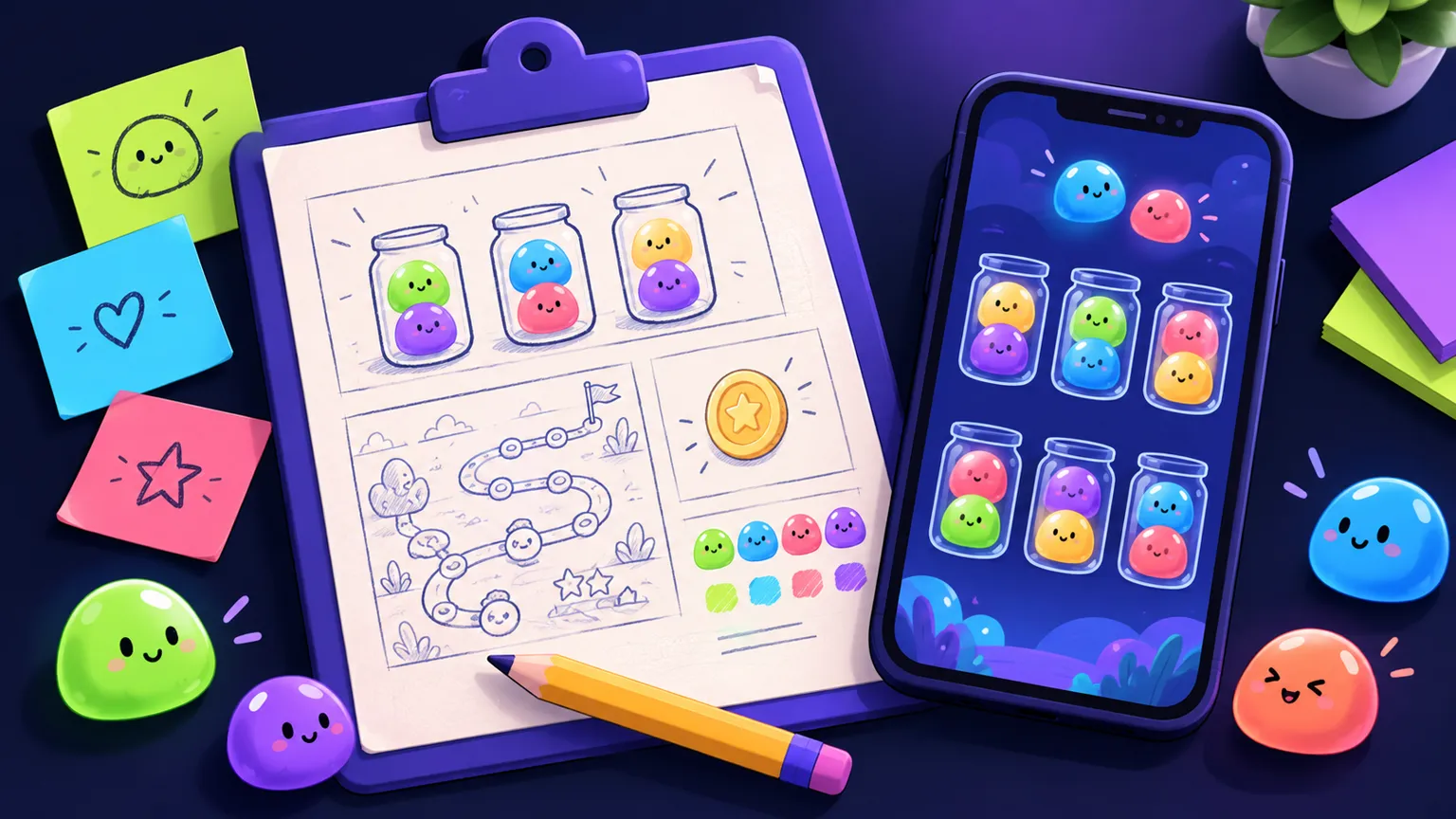
A brief versus a full game design document
A full game design document describes every rule, screen, number and asset, and on a large team it grows to dozens of pages. You do not need that to commission a focused mobile game. You need a brief: the decisions only you can make, written down clearly enough that a studio can turn them into a scoped blueprint and a price.
Searches for a "puzzle game design document" or a "word game design document template" are usually looking for the same thing: a structure that makes sure nothing important is forgotten. The template below is that structure, and the sample shows what good answers look like.
Sample brief: our example word game concept
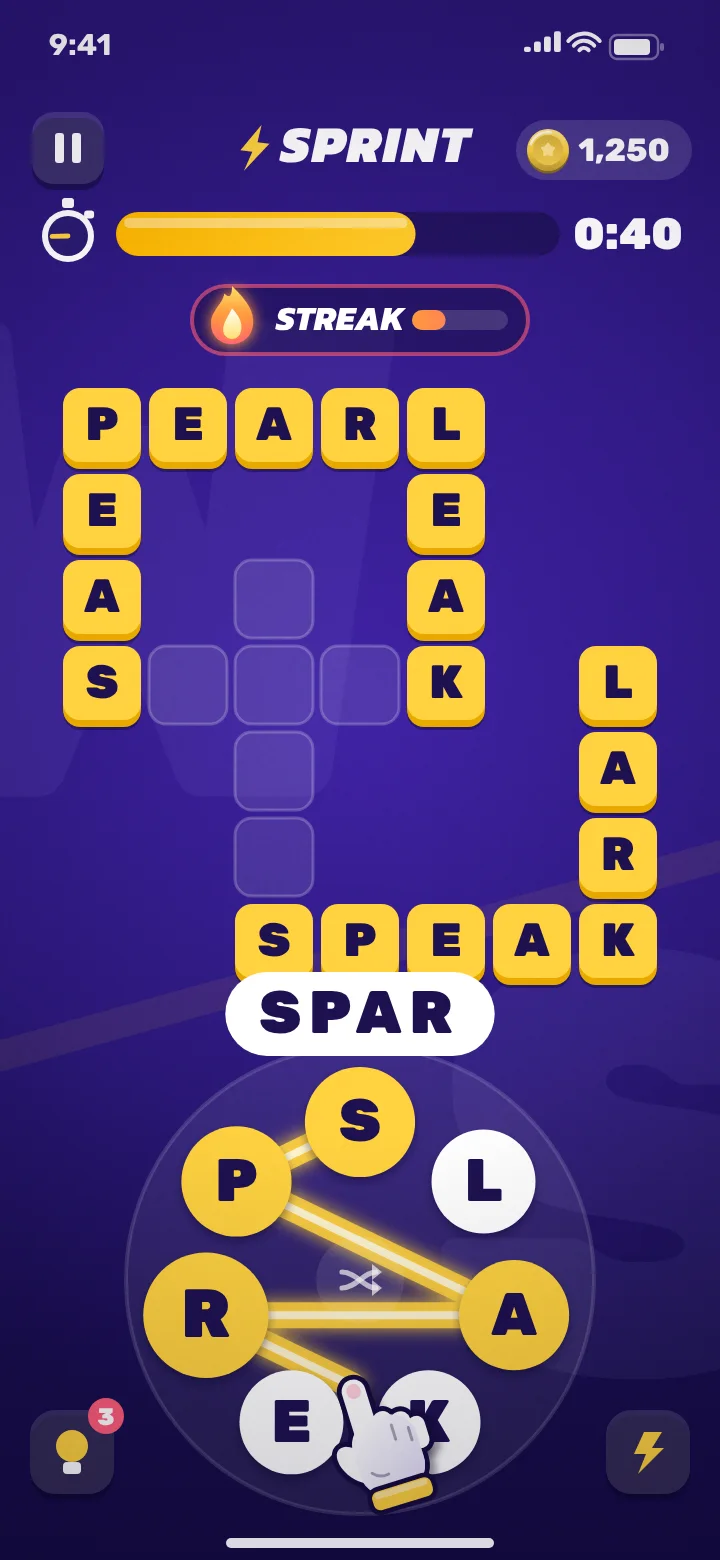
This brief is filled in for an original word game concept made by the studio as an example. It has not been released and has no players; it is here to show the level of detail that makes a brief useful. You can see the concept's screens on the word game page.
| Field | Filled in |
|---|---|
| One-sentence loop | Swipe letters into words against a 60-second clock; every streak adds time back. |
| Objective | A fast word game with big type, streaks and a substantial offline content bank. |
| Player | Word lovers who want a quick daily brain warm-up. |
| First minute | The first round uses a three-letter word with the swipe path highlighted, so the rule is learned without a text tutorial. |
| Core rules | Letter wheel under a crossword grid; valid words fill the grid; a streak meter adds seconds; the round ends when the clock runs out. |
| Screens | Home, category picker, game board, results, shop (ad-free purchase), settings. |
| Content | Fixed category set (for example Animals, Food, Travel, Space) and an offline word bank, sized in the blueprint. |
| Progression | Local streaks, category unlocks and personal bests. |
| Monetization | Hints through rewarded ads and a one-time ad-free purchase. |
| Art direction | Clean and bold: large, high-contrast letter tiles and a bouncy streak meter. |
| Accessibility | Letter tiles meet touch-target sizes so fast swipes stay accurate. |
| Store page | A correct-answer burst with tiles readable at thumbnail size. |
| Ad angles | Beat-the-clock tension, the streak burst, and "can you find the 7-letter word?" |
| References | Two or three word games the owner plays, each with one thing to borrow (pace, tile size) and one thing to avoid. |
| Out of scope for release one | Daily puzzle calendar, leaderboards, accounts, multiplayer, extra languages. |
| Package fit | Core: one play format with an offline word bank. |
The out-of-scope row does as much work as the rest. A daily puzzle calendar and leaderboards are good ideas, and in DFY Games' scope guide they move a word game from Core to Advanced. Writing them down as "later" keeps the first build focused and makes the upgrade path visible.
Blank template: copy this checklist
Mobile game brief
- One-sentence core loop (verb, goal, reward)
- Objective: what the game should feel like after five minutes
- Player: who plays, when, for how long per session
- First minute: how a new player learns the rule without reading
- Core rules: win, fail and scoring conditions
- Screen list: every screen a player can reach
- Content: levels, words, tracks or waves, and how they are made
- Progression: what the player unlocks or improves over time
- Monetization: rewarded ads, interstitial placement, in-app purchases
- Art direction: style, palette, two or three visual references
- Audio: music mood and sound feedback for the main action
- Accessibility: color-blind support, touch targets, text size
- Audience age: is anyone under 13 likely to play?
- Store page: the one moment the screenshots should show
- References: games you like, with what to borrow and avoid
- Out of scope for release one
- Accounts you already have: Apple, Google, ad platforms
Genre-specific notes to add
| Genre | Add to the brief |
|---|---|
| Sort and block puzzles | The single rule, target level count, whether levels are generated or hand-made, hint and undo behavior, and what happens when the player is stuck |
| Word and trivia | Language, word list source and how offensive words are filtered, letter distribution, how many words per category |
| Runners and arcade games | Control scheme, speed curve over a run, revive rules, what ends a run |
| Idle and tycoon | Currencies, offline earnings and their cap, upgrade costs curve, reset or milestone system |
| Tower defense | Number of tower and enemy types, waves per stage, upgrade paths |
| Shooters and racing | Number of weapons or vehicles, maps or tracks, opponent behavior, controls on small screens |
If children are part of your audience, say so in the brief. It changes which ad networks and data practices are allowed under Google Play's Families policies and similar rules, and it is far easier to plan for at the start.
Sources: [S12]: Google Play, Families Policies (opens in a new tab)
Gaps that slow a brief down
- A genre with no loop: "a puzzle game" needs the actual rule.
- Feature lists without priorities. Mark each one launch or later.
- References that contradict each other on pace or art style.
- No monetization decision, which leaves screen layout and level pacing undecided.
- Several people giving feedback. Name one feedback owner.
How a brief becomes a blueprint at DFY Games
When you start a game build, you answer a few short questions and pay for the package. Right after payment the studio turns your answers into a written blueprint covering the mechanic, screens, content allowance, art approach and systems. You approve it, and revisions are unlimited inside that blueprint until first submission. If your idea needs more than the package covers, you choose to trim it, upgrade for the difference, or take a full refund.
No idea yet? The game idea quiz suggests a concept and monetization plan you can paste straight into the template above. For app projects, use the app development brief template instead.
Frequently asked questions
What should a mobile game design document include?
At minimum: the core loop, the target player, the first minute, a screen list, content and progression, monetization, art direction and what is out of scope.
How long should a game brief be?
One to two pages is enough to commission a focused mobile game. The studio's blueprint fills in the detailed rules and numbers.
Do I need a full GDD before hiring a studio?
No. A clear brief is enough for a scoped build; a full design document is mainly useful for large teams working over many months.
What is different about a puzzle game design document?
It needs the single rule, the level count, whether levels are generated or hand-made, and how hints and fail states work.
Is the sample word game a real released game?
No. It is an original example concept made by DFY Games to show the level of detail a brief needs.
Sources
- [S12] Google Play, Families Policies
Written and reviewed by the DFY Games team. Published ; facts checked . Prices and store rules change: check the linked sources before you rely on a figure.