Where the cost sits in a cozy game
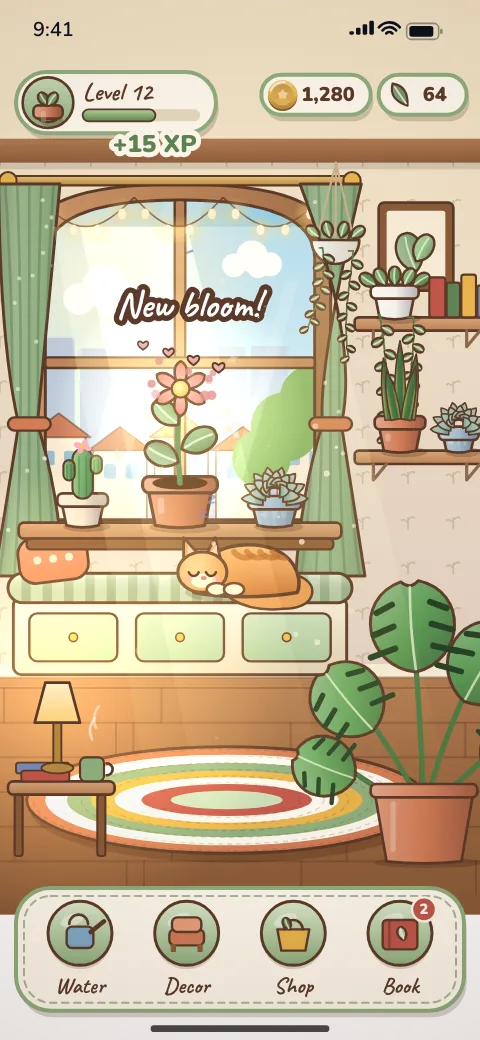
Cozy games have gentle mechanics and heavy art. There is rarely a hard rule to tune, but there are dozens of chairs, lamps, plants and rugs, each of which has to look good next to every other one. Players also expect the space to feel alive: plants that sway, a cat that naps, light that changes. Those expectations drive the budget more than the code does.
Our example cozy simulation concept is a window garden: grow plants, earn from the harvest, decorate a small apartment and watch the room change with the seasons. Multiple rooms, seasons and a decor economy place it in Advanced. The question for your budget is which of those pieces your game actually needs on launch day.
Decoration, gardening and simulation compared
The table compares three kinds of cozy systems with bounded asset counts. The counts are illustrations of what a blueprint would write down, chosen to show scale; your blueprint sets the real numbers for your art style.
| System | What it needs | Bounded example | Where it lands |
|---|---|---|---|
| Decoration only | A placement grid, an item drawer, rotate and remove, a saved layout | One room, about 40 decor items in 4 categories | Core, as the one loop |
| Gardening only | Plant, water, grow timers, harvest, a plant book | 12 species x 4 growth stages = 48 plant states, one window sill | Core, as the one loop |
| Gardening that pays for decoration | Both systems joined by a soft currency, prices, unlock pacing | 12 species, 40 decor items, one currency | Advanced (two connected systems) |
| Rooms and seasons | Room unlocks, background swaps, seasonal sets | 2 rooms x 4 seasons = 8 room backgrounds, plus seasonal decor | Advanced (multiple environments) |
| Simulation | Character needs, daily schedules, weather, visitors with behavior | Depends on how many needs and actors interact | Advanced if small and bounded; often a custom quote |
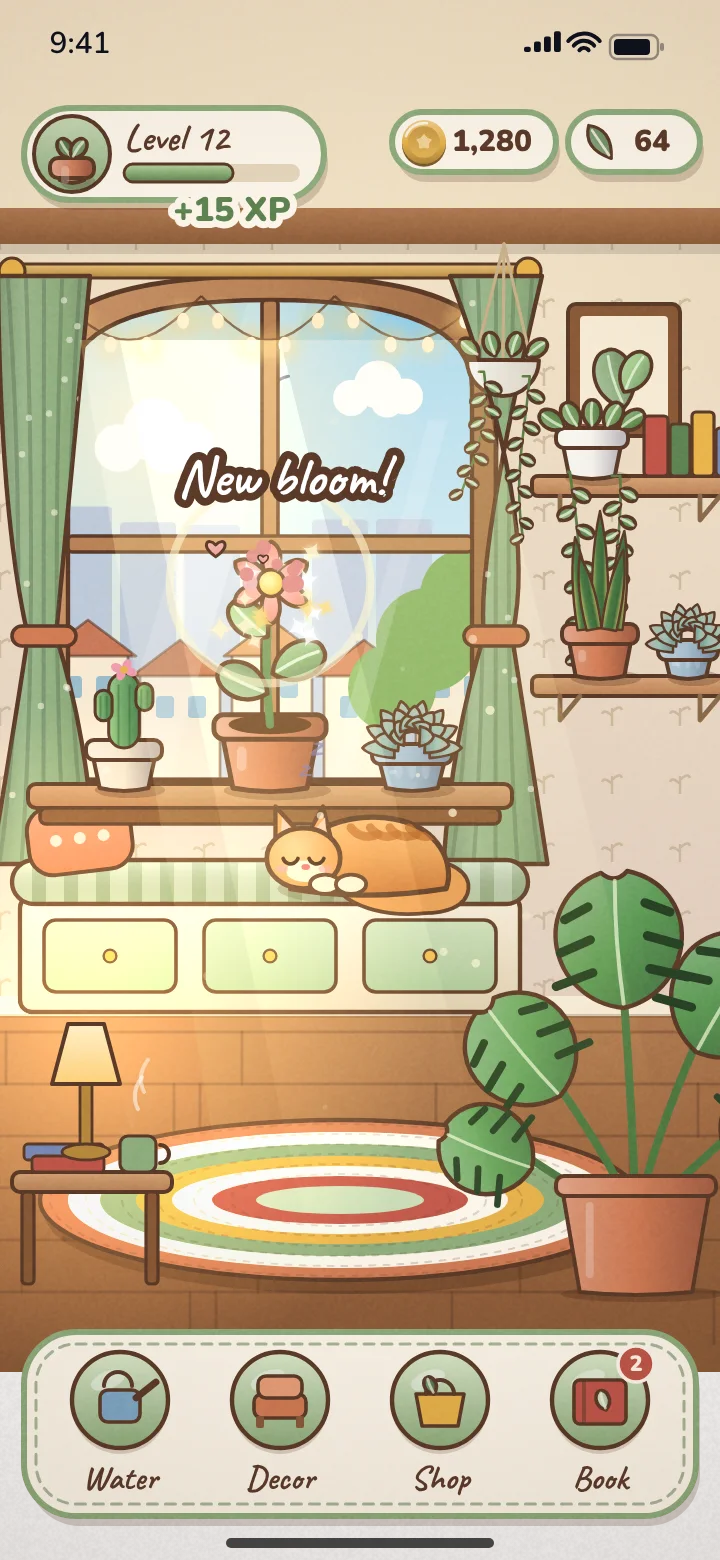
Multipliers are what make cozy budgets drift. A plant species is not one picture: it is a seedling, a sprout, a young plant and a bloom. A room with seasons is four rooms of background art. Ask for "just a few more plants" with four growth stages and four seasonal variants and each new species becomes up to 16 drawings.
What each tier costs, with assumptions
| Tier | Scope assumed | DFY route | Typical studio range |
|---|---|---|---|
| One-loop cozy game | One room or garden, one loop (decorate or grow), bounded item set, cosmetic unlocks, local save | Core Game $499, or $1,299 with launch | $15,000 to $35,000 for a simple casual game |
| Connected cozy game | Gardening plus decoration, a soft currency, room unlocks, seasonal sets, plant collection | Advanced Game + Launch $2,999 | $30,000 to $150,000 for casual with progression |
| Live cozy game | Visiting friends' rooms, accounts, server-delivered seasonal events, trading | Custom quote | $80,000 to $250,000 for puzzle games with light live-ops (closest comparison) |
Core targets a submission-ready build within 10 business days after scope lock and complete intake. Advanced targets a polished first playable within 10 business days, with the full submission-ready build normally completed within 30 days. Studio ranges come from one studio's published 2026 estimate for hourly-billed work; the live-ops figure there is for puzzle games, used here as the closest comparison. Developer accounts and ad spend are extra everywhere.
Sources: [S18]: Innovecs Games, How Much Does Mobile Game Development Cost in 2026? (opens in a new tab)
What a Core cozy game looks like
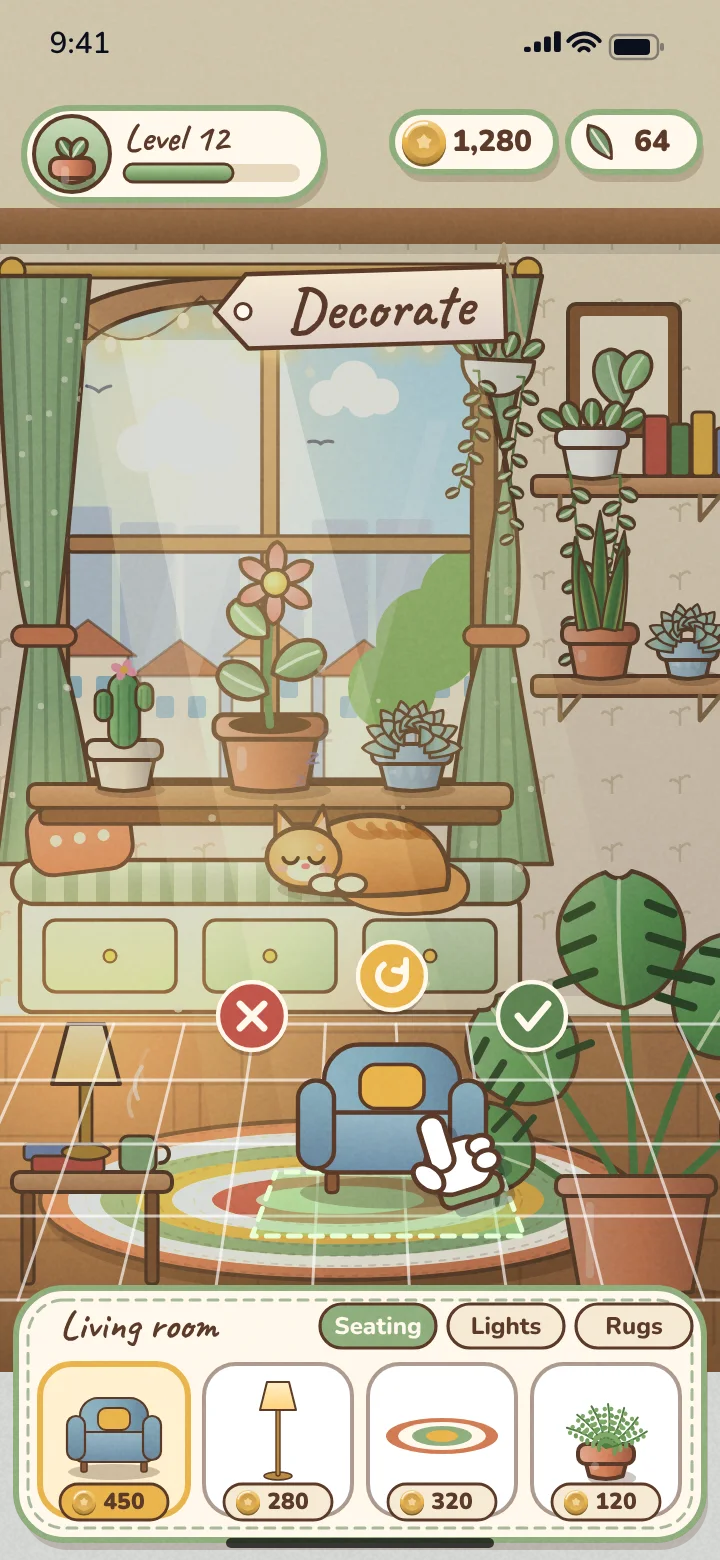
A Core cozy game picks one loop and lets the art do the rest. A decorating game can give the player one room, a well-stocked drawer of items and a grid that makes every arrangement look intentional on a small phone. A gardening game can give them a window sill, a dozen species and the small pleasure of a bloom. Either can unlock cosmetic themes over time without becoming two systems.
Monetization in Core stays simple: a rewarded ad for a small top-up or a faster bloom, and up to two simple purchases such as a decor pack and remove-ads. A soft-currency economy with offers belongs to Advanced.
Plan for content after launch
Cozy players tend to expect new seasonal sets and items over time. Ongoing content is not part of Core, and Advanced covers the launch build and its 30-day campaign. If seasonal drops are part of your plan, budget them as later work and decide early whether new items ship as app updates or need server-delivered content, which is a backend and a custom quote. The maintenance guide covers how that work is usually scheduled.
If you already sense your wishlist growing, keeping a cozy game bounded shows how to inventory rooms and interactions and sort decorative choices from new systems before you buy.
When a fixed-price cozy game fits, and when it does not
- Fits Core: you can name the one loop (decorate or grow), the one room it happens in and roughly how many items or species it needs, and you want to see whether players return to that space.
- Fits Advanced: the appeal depends on systems feeding each other, such as harvests paying for decor, rooms unlocking and seasons changing what grows. Expect a first playable in 10 business days and a full build within 30 days.
- Custom quote: the game is built around other players, such as visiting rooms, gifting or trading, or around live seasonal events delivered from a server.
- Probably not a commission yet: you have a mood board but no loop. A cozy game needs a reason to come back tomorrow, and the idea quiz is a cheap way to find it before paying for art.
All three packages are compared in pricing. Both launch tiers include 16 creatives and 30 days of campaign management; the before-and-after room transformation in our example concept is the kind of moment those creatives are built around. Ad spend is paid separately to the ad platforms.
Frequently asked questions
How much does it cost to develop a cozy game?
A one-loop, one-room cozy game can fit the $499 Core Game package; a connected game with gardening, decoration, rooms and seasons fits Advanced Game + Launch at $2,999. Hourly-billed studios estimate $15,000 to $150,000 for casual games depending on progression.
Why is the example cozy concept an Advanced build?
It connects gardening, a decor economy, multiple rooms and seasons, which are several connected systems and environments.
What makes cozy games expensive?
Asset multipliers: each plant has several growth stages and each room or item may need seasonal variants, so counts grow faster than they look.
Can I add seasonal content after launch?
Yes, as later work with its own quote; server-delivered seasonal events need a backend and fall under a custom quote.
Can players visit each other's rooms?
Not in a package. Visits need accounts and a backend, so social features in a cozy game are quoted separately.
Sources
- [S18] Innovecs Games, How Much Does Mobile Game Development Cost in 2026?
Written and reviewed by the DFY Games team. Published ; facts checked . Prices and store rules change: check the linked sources before you rely on a figure.