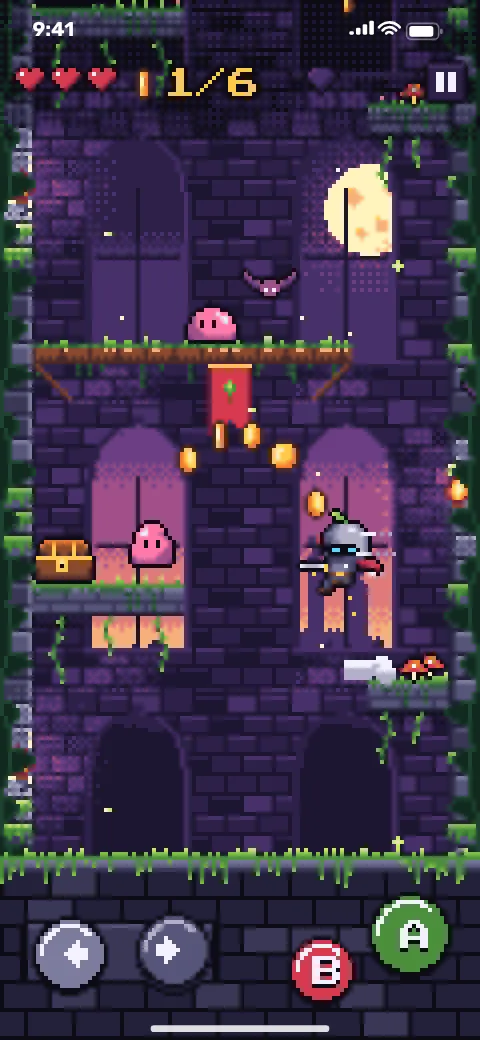
What a platformer costs at each scope
Platformers look simple in a trailer and get expensive in production, because almost everything the player touches is placed by hand. A puzzle game can reuse one rule across 100 levels. A platformer level needs someone to lay out every ledge, enemy and coin trail, then play it on a phone until the jumps feel fair. That is why the price moves with worlds, enemies and animation more than with screen count.
| Scope | What it includes | Price and timing |
|---|---|---|
| One world | One character and moveset, one world theme, checkpoints, collectibles, a small enemy set with basic patterns, roughly 15-25 short levels depending on art and content complexity | Core Game, $499. Submission-ready build targeted in 10 business days after payment, completed intake and blueprint approval |
| One world with a launch | The same build plus 16 launch creatives and 30 days of campaign management | Core Game + Launch, $1,299. Ad spend is paid separately to the ad platforms |
| Several worlds | Multiple world themes, an enemy roster, power-ups, boss encounters, mission structure, deeper collectibles and character progression | Advanced Game + Launch, $2,999. First playable in 10 business days, full build within 30 days |
| Large or unusual | A big interconnected exploration map with many bosses, realtime multiplayer, a level editor or shared user levels, licensed characters, or an unusually large animation set | Custom quote, agreed in writing before you pay |
| Studio market context | Simple casual games $15,000 to $35,000; casual games with progression $30,000 to $150,000 (one studio's 2026 estimates by game type, not platformer-specific) | Typical outsourced studio projects |
Our example platformer concept is rated Advanced on the platformer service page, with a note that one world fits Core. The difference between those two ratings is almost entirely content: the same knight, the same jump, but four themed areas and a stone golem boss instead of one ruin.
Sources: [S18]: Innovecs Games, How Much Does Mobile Game Development Cost in 2026? (opens in a new tab)
The four things that move the price
| Driver | Why it adds cost | How to keep it bounded |
|---|---|---|
| Worlds | Each world needs its own tileset, background layers, hazards, music and usually new enemies. Each world is a small art production of its own. | Start with one world and plan the next as a later update. Reuse tiles with a lighting or weather variant for late levels. |
| Enemy behaviors | Every behavior (patrol, hop, fly, shoot, charge) needs movement logic, a hitbox, an animation set and levels designed around it. Bosses add phases, telegraphs and a dedicated arena. | Three or four enemy types with clear patterns go a long way. Treat bosses as an Advanced item. |
| Control polish | Touch controls have no physical feedback, so jump timing, button size and forgiveness windows need tuning on real phones. This is hours of play and adjustment, and it is where cheap platformers fail. | Keep the moveset small. Every new move (dash, wall climb, glide) multiplies the tuning and the level design that has to teach it. |
| Original animation | The hero needs frames for idle, run, jump, fall, land, hurt and any special moves. Each enemy needs its own set. Pixel art makes each frame cheaper but does not remove the frame count. | Agree the list of animation states per character in the blueprint. Cosmetic skins that recolor the same frames are far cheaper than new characters. |
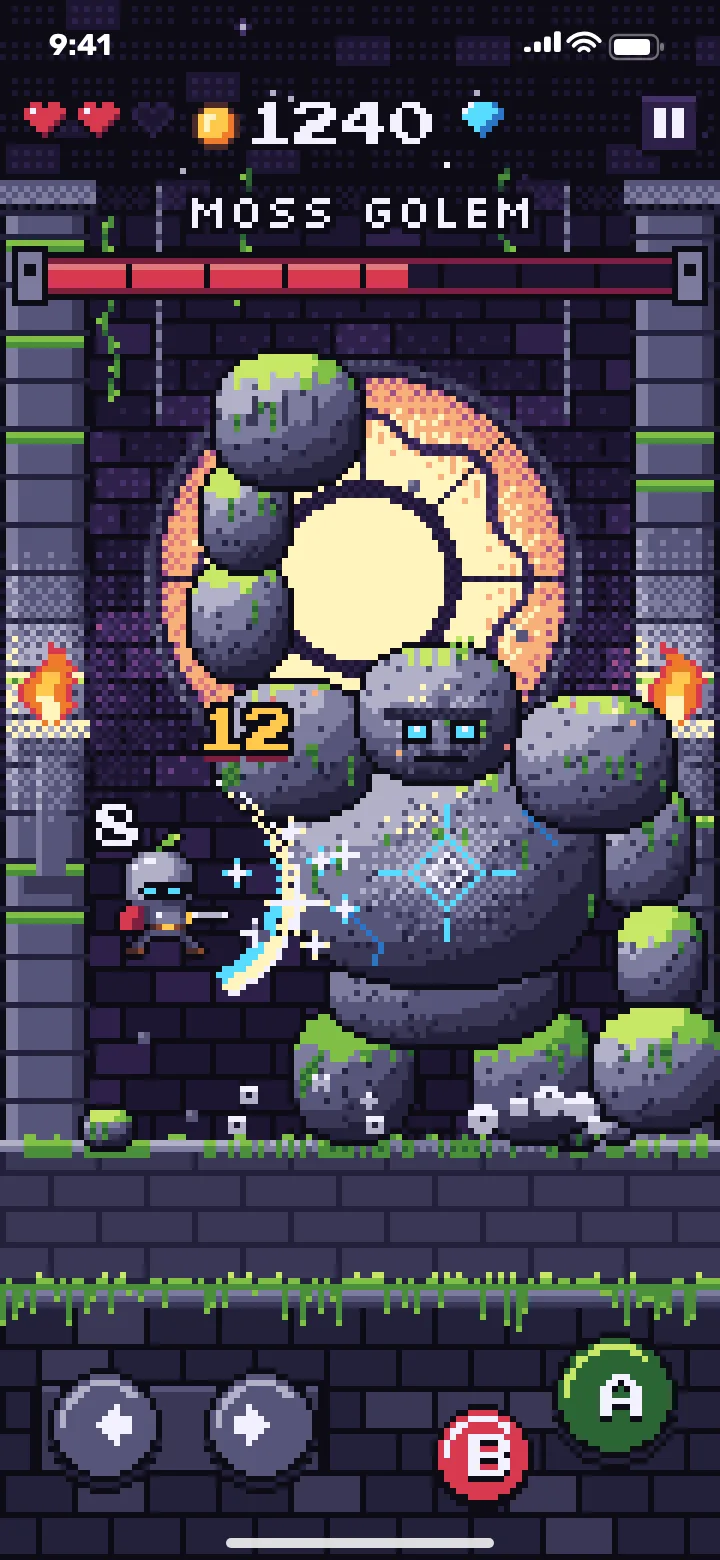
A worked example: trimming a brief to fit
The trimmed version is still a complete game. Players finish a world, find secrets and can buy a skin. What it gives up is breadth, and breadth is the part you can add once you know people enjoy the jump. Our build options guide compares this staged approach with hiring a studio or a freelancer.
Costs that sit outside any package
- Apple Developer Program membership: $99 a year.
- Google Play developer registration: a one-time $25 fee.
- Store commission on purchases: 15% for developers in the small-business programs.
- Ad spend if you buy a launch package: paid directly to Meta, TikTok, Google or Apple through your own ad accounts.
- Licensed music or characters, if you want them: these are excluded from Core and Advanced and need their own licenses.
If you hire a studio by the hour instead, rates vary widely by region. The same 2026 estimate puts North American studios at $62 to $150 an hour, Eastern Europe at $50 to $100 and Asia at $25 to $50. A platformer's tuning time is hard to estimate in advance, which is one reason hourly platformer quotes tend to grow.
Sources: [S18]: Innovecs Games, How Much Does Mobile Game Development Cost in 2026? (opens in a new tab)[S19]: Apple Developer, Enrollment (opens in a new tab)[S20]: Google Play Console Help, Get started with Play Console (opens in a new tab)[S21]: Apple Developer, App Store Small Business Program (opens in a new tab)[S22]: Google Play Console Help, Service fees (opens in a new tab)
When a fixed-price platformer fits, and when it does not
A package fits when you can describe the game as one character moving through one place (Core) or a bounded set of worlds (Advanced), and you care more about feel than about size. It does not fit when the appeal of your idea is scale: a huge castle map to explore over 15 hours, online races, or players building and sharing levels. Those deserve a custom quote and a longer schedule.
Before you pick a package
- Count the worlds you need at launch, not the ones you imagine in year two.
- List every move the hero has. Each one beyond run and jump is a scope decision.
- Name your enemy types and say whether any of them is a boss.
- Decide whether the game auto-runs or uses a left-right control, because that changes the control work.
- Write down any character, music or brand you do not own.
Before you commission, read what to test in a mobile platformer's controls, since control feel is the part buyers most often forget to check. When the scope is clear, the packages are on the pricing table.
Frequently asked questions
How much does it cost to make a mobile platformer?
With DFY Games, a one-world platformer with about 15-25 short levels fits Core Game at $499, and a multi-world platformer with bosses fits Advanced Game + Launch at $2,999. Studio estimates for casual games with progression run $30,000 to $150,000.
Why do platformers cost more than puzzle games of the same size?
Platformer levels are laid out by hand and tuned by playing them, while many puzzle games reuse one rule across generated levels. Enemy behaviors and character animation add further work per level and per world.
Can a boss fight fit the $499 package?
Bosses are listed as Advanced scope for platformers, because each one needs its own arena, attack phases and animation set. A Core platformer uses a small enemy set with basic patterns.
Is the platformer finished in 10 business days?
Core targets a submission-ready build in 10 business days after payment, completed intake and blueprint approval. Advanced delivers a first playable in 10 business days and the full build within 30 days; store review comes afterward and is controlled by Apple and Google.
Do I own the level designs and pixel art?
After full payment you receive the game files and the original assets made for the project. Third-party software, fonts, SDKs and stock assets keep their own licenses.
Sources
- [S18] Innovecs Games, How Much Does Mobile Game Development Cost in 2026?
- [S19] Apple Developer, Enrollment
- [S20] Google Play Console Help, Get started with Play Console
- [S21] Apple Developer, App Store Small Business Program
- [S22] Google Play Console Help, Service fees
Written and reviewed by the DFY Games team. Published ; facts checked . Prices and store rules change: check the linked sources before you rely on a figure.