Why word games are cheaper than most genres
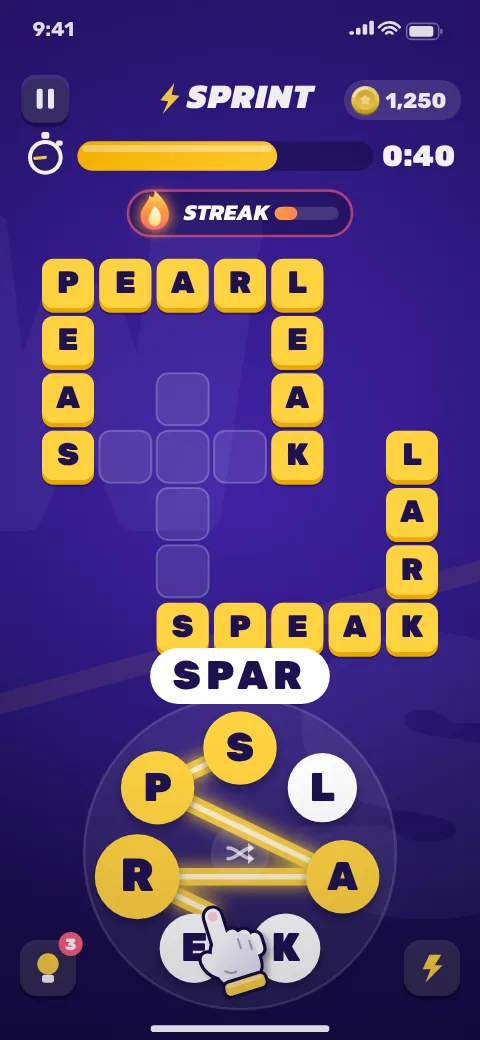
A word game has one input (swipe or tap letters), simple feedback and little animation, and its content is mostly data. Once the rule works, a hundred more rounds cost little extra code. That is why our example word game concept is listed as an excellent fit for Core: a 60-second swipe round, streaks that add time back and a large offline word bank.
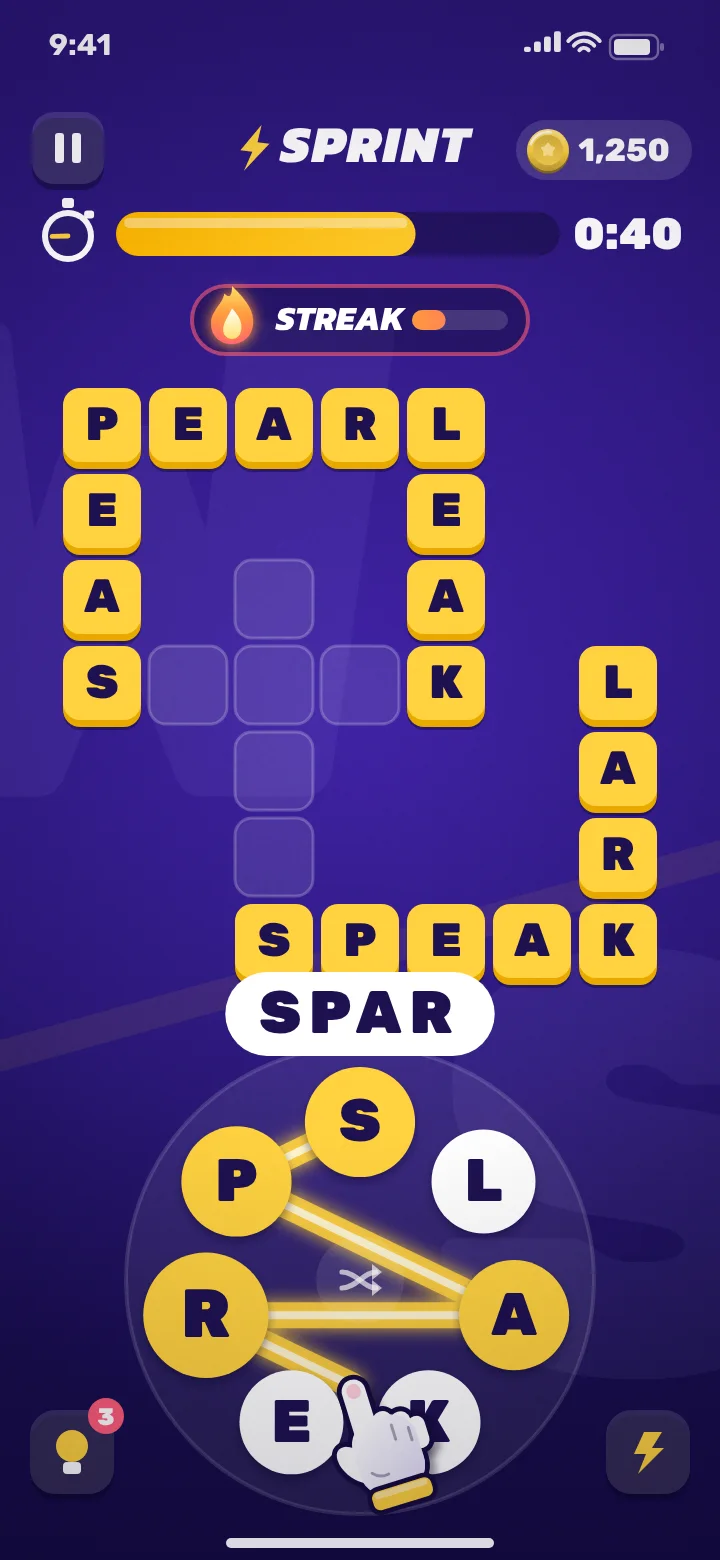
The cost moves elsewhere. Someone has to supply the words or questions, make sure the game accepts every valid answer and rejects offensive ones, and decide how hints work without making the game trivial. Those three things are where word game budgets go wrong.
Scope tiers with explicit assumptions
| Tier | Scope assumed | DFY route | Typical studio range |
|---|---|---|---|
| Single-mode word or trivia game | One play format, fixed categories, local streaks and bests, offline content bank agreed in the blueprint, hints, rewarded ads, ad-free purchase | Core Game $499, or $1,299 with launch | $15,000 to $35,000 for a simple casual game |
| Word game with retention systems | Daily challenges, a second mode, content packs, leaderboards | Advanced Game + Launch $2,999 | $80,000 to $250,000 for puzzle games with light live-ops |
| Live or social word game | Accounts, cloud-delivered content, realtime matches against other players | Custom quote | Above the light live-ops range |
Assumptions: one language, iOS and Android from one project, clean 2D type-led art, no backend in Core. The studio ranges come from one studio's published 2026 estimate for hourly-billed work. Content licensing fees, if you choose a paid source, are extra in every tier, as are developer accounts and ad spend.
Sources: [S18]: Innovecs Games, How Much Does Mobile Game Development Cost in 2026? (opens in a new tab)
Word lists, dictionaries and content licensing: the cost drivers
A word game needs two lists: the words it accepts as valid and the words it uses as answers or puzzles. The accepted list should be large so players are not punished for knowing an obscure word. The answer list should be small, familiar and clean. Mixing them up is the most common content mistake, and fixing it late means redoing the QA.
Where the words come from is a budget choice. There are three broad routes, and each moves the cost to a different place. The prices depend on the publisher, the writer and the size of the bank, so the table below describes what drives the cost rather than quoting figures.
| Choice | What you pay for | What pushes the cost up | Usually fits |
|---|---|---|---|
| Open word list with a permissive license | No license fee; time to filter, pick a spelling standard and build the answer list | A large answer list that needs a human read, several languages or spelling variants | Most first releases, including Core |
| Licensed dictionary | A license from the publisher on its own commercial terms | App or per-platform terms, attribution rules, a fixed license term that needs renewing | A brand or tournament angle where the dictionary name matters to players |
| Custom-written content | Writing, fact-checking and proofreading time, by you or on a quote | Trivia that needs two sources per answer, written clues for every word, frequent new packs | Themed or branded games where the content is the hook |
Offensive-word QA is a cost in every route, including paid ones. Large lists contain slurs and crude words, and the answer list needs a person to read every entry before launch. Budget that review time whatever the source, and more of it if children are part of your audience.
Original content made for your project transfers to you after full payment; third-party lists keep their own licenses. The named sources, license obligations, ownership and the full QA checklist are in who supplies the words in a commissioned word game.
Hint systems and what they cost
Hints are where a word game earns money and where it can lose players. Too generous and nobody needs to think; too stingy and players quit on a word they will never find. Each hint type below is small to build. The work is in pacing them.
| Hint | What it does | Build effort | Monetization link |
|---|---|---|---|
| Shuffle | Rearranges the letters | Small | Usually free |
| Reveal a letter | Fills one letter of a target word | Small | Rewarded ad or hint currency |
| Reveal a word | Fills a whole word | Small | Higher price than a letter |
| Category or definition clue | Shows a clue for one answer | Small code, but every answer needs a written clue | Rewarded ad |
| Extra time | Adds seconds to a timed round | Small | Rewarded continue |
Our example concept uses hints through rewarded ads and a single ad-free purchase, which fits Core's one rewarded flow and up to two simple purchases. A hint currency with bundles and offers is a deeper economy and belongs to Advanced.
Why a single-mode release is the right first step
Daily puzzles, category packs, timed and untimed modes, leaderboards: word games invite all of them. Each is a reasonable second step. On launch, though, one well-paced mode with a deep content bank tells you whether players like your rule, and it keeps the content QA to one format.
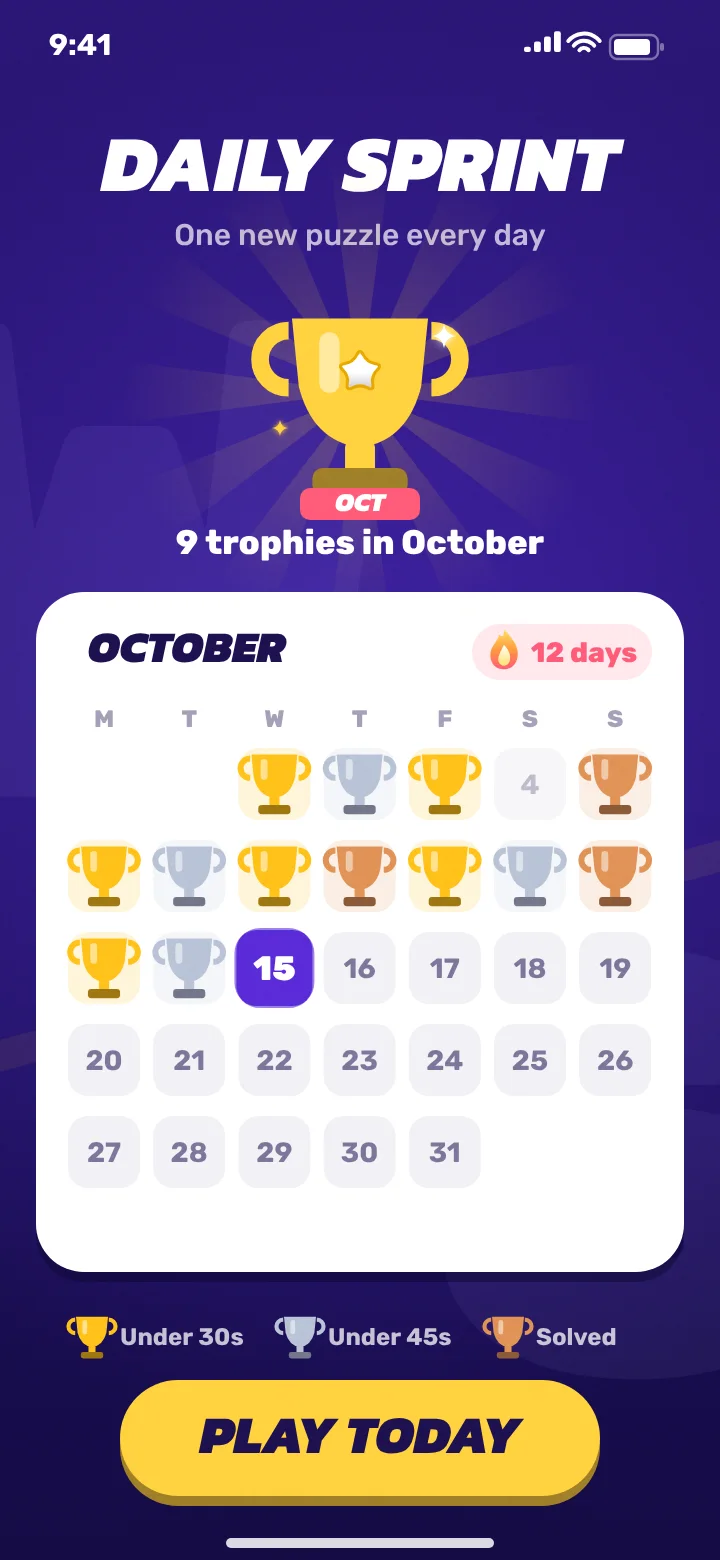
A category picker with a fixed set of themes is still one mode, and it fits Core. Daily challenges are listed with Advanced because they need a calendar of content, a streak system and either a long pre-built schedule or content delivered from a server.
What to ask word game developers
- Which word list will you use, what is its license, and does it need a notice in the app?
- Do you keep separate accepted and answer lists?
- How do you filter offensive words from answers and from accepted words?
- How many rounds or questions are in the bank, and who checks them?
- How are new words or questions added later: an app update or a server?
- Who owns the content written for the game?
The broader questions for any studio are in the guide to hiring a mobile game developer.
When a commissioned word game fits, and the alternatives
- Fits Core: one play format, a fixed set of categories and a content source you have already chosen or are happy for the studio to propose. A submission-ready build is targeted within 10 business days after scope lock and complete intake.
- Fits Advanced: the plan depends on daily challenges, a second mode, content packs or leaderboards from day one.
- Custom quote: players compete live, sign in to accounts, or content is edited and delivered from a server.
- A different product: if you need a one-off quiz for a brand campaign, a classroom or an event, a web quiz tool or an existing quiz platform is cheaper and faster than a store app. A mobile game makes sense when you want something people install and return to.
Store review is controlled by Apple and Google, and no studio can promise approval or downloads. The content QA, though, is in your hands and the studio's, so agree on it in the blueprint. Compare the three packages on the pricing section.
Frequently asked questions
How much does it cost to develop a word game?
A single-mode word or trivia game with an offline content bank fits the $499 Core Game package; daily challenges, extra modes and leaderboards fit Advanced Game + Launch at $2,999.
Do I have to pay for a dictionary?
Not always. Permissively licensed open word lists exist, while branded or tournament dictionaries are licensed from their publishers; either way the license terms need checking.
Are hints included in a Core build?
Yes. Simple hints through a rewarded ad and an ad-free purchase fit Core; a hint currency with bundles and offers is Advanced.
Can a word game have daily puzzles in Core?
Daily challenges are listed under Advanced because they add a content calendar and a streak system; a fixed category set with one mode fits Core.
Can players compete against each other live?
Realtime matches need servers and matchmaking, so they receive a custom quote; Advanced can include leaderboards where scoped.
Sources
- [S18] Innovecs Games, How Much Does Mobile Game Development Cost in 2026?
Written and reviewed by the DFY Games team. Published ; facts checked . Prices and store rules change: check the linked sources before you rely on a figure.