What a block puzzle brief has to settle
Many block puzzle briefs start as "like that famous one, but with my theme". That gives a studio a reference point and leaves almost every real decision open. It also pulls the design toward the parts of the reference you are not allowed to reuse. A better brief describes the game from the board up, so it can be built, tested and judged without pointing at someone else's product.
Six things need an answer: the board, the pieces, the placement and clear rules, the feedback for every action, the fail and continue moment, and the identity (name, art, sound). The general mobile game brief template covers audience, monetization and launch; this guide covers the parts specific to block puzzles.
Describe the board prototype in plain words
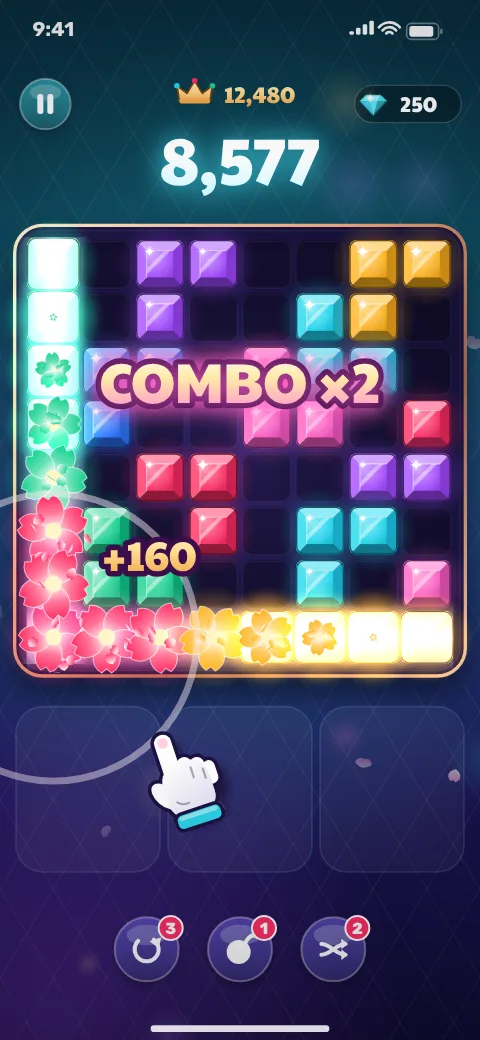
Write the prototype so that someone who has never played a block puzzle could sketch it. Numbers can be provisional; the studio will tune them during the playable checkpoint. A readable description looks like this:
Then list what you are leaving to the studio: exact grid size, piece weighting in the generator, score values and the continue rule. Flag the things you care about strongly, such as "no timer" or "must be playable one-handed", so they survive tuning.
A rule and feedback matrix
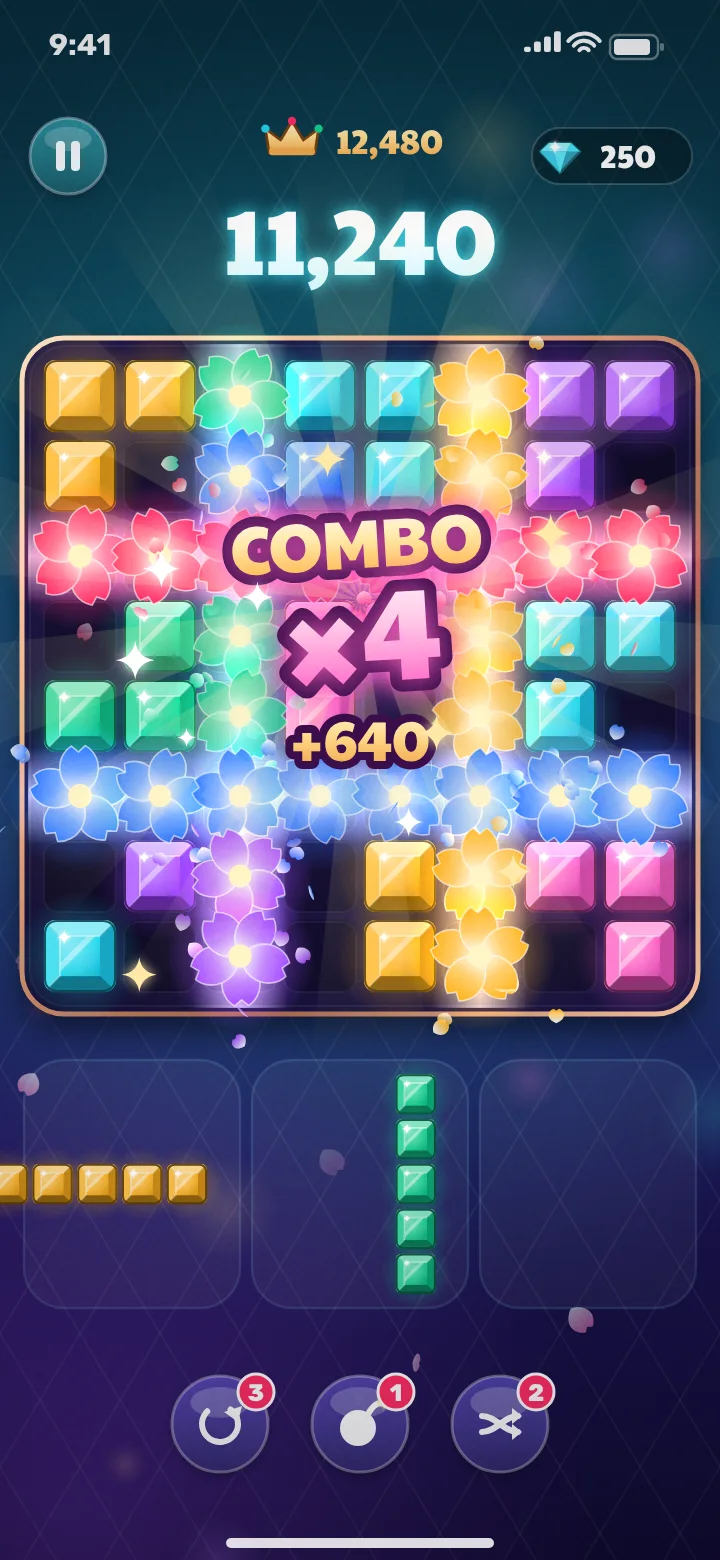
Block puzzles live on feedback. The rules are simple, so the feel of each action is what players remember and what your ads will show. A matrix like this one turns "make it satisfying" into decisions a developer and an artist can build and you can check at the playable checkpoint.
| Player action | Rule | Visual feedback | Sound and haptics |
|---|---|---|---|
| Picks up a piece | Any tray piece can be dragged | Piece scales up and lifts above the finger | Soft pick-up click, light haptic |
| Drags over a valid spot | Piece fits if every cell lands on an empty cell | Ghost outline on the board; lines that would clear glow | None, to keep dragging calm |
| Drags over an invalid spot | Overlap or off-board is not allowed | No ghost; piece keeps a slight tint | None |
| Releases on a valid spot | Piece locks; cells score points | Snap with a small bounce | Placement thud, light haptic |
| Completes one line | Full row or column clears | Cells burst in sequence along the line | Rising chime, medium haptic |
| Completes two or more lines | Combo multiplier applies | Combo banner and screen-wide light | Bigger chord, stronger haptic |
| Places the last tray piece | A new tray of three is dealt | Pieces slide in from the edge | Short deal sound |
| Has no valid move | Run ends unless a continue is used | Board dims; continue offer appears | Low tone, no harsh buzz |
| Accepts the rewarded continue | Space is cleared, run resumes | Blocks pop away in a sweep | Relief sound |
| Beats the best score | New best is saved locally | Crown and score count-up on results | Fanfare |
Two columns are worth adding for your own brief: an accessibility note (colorblind-safe shapes or patterns, a reduced-motion option) and the ad moment each row could become. The multi-line combo and the near-full-board rescue are the moments our example concept uses for store screenshots and video ads.
How to keep a block puzzle original
The best known US case is Tetris Holding v. Xio Interactive (District of New Jersey, 2012). According to the Wikipedia summary of the ruling, the judge treated the gameplay rules of Tetris as unprotected ideas, but found that the clone Mino copied protected expression: the look of the pieces, the board and the overall look and feel. The court also found that Mino's marketing, which used the same color and style of pieces, infringed Tetris's trade dress, and Mino was permanently barred from distribution. The decision binds only that district, though other courts have cited it in clone disputes.
Apple's App Review Guidelines say the same thing in store terms. Section 4.1, titled Copycats, asks developers to come up with their own ideas and not to copy a popular app or make minor changes to another app's name or UI. What follows is practical guidance from a producer, not legal advice. Have a lawyer check your name, logo and store listing before you launch.
Originality check before you approve the blueprint
- The game name is not a famous block game's name, a pun on it or a suffix borrowed from it, and you have searched both stores and a trademark database for it.
- The logo, icon and title lettering do not echo a known block game's.
- Piece colors and block style come from your own art direction, not from a reference game's palette.
- The board frame, backgrounds and menu layout are designed for your game, not traced from screenshots.
- Music and sound effects are original or properly licensed, and none imitate a recognizable theme.
- Store screenshots and ads do not mimic a competitor's layout, and they do not say "like" or name another game.
- Store keywords avoid competitors' trademarks.
- Your own twist is written down: a setting, a material, what a clear turns into, a mode that only your game has.
Give the game an identity of its own
Identity does most of the work of keeping a block puzzle original, and it also sells the game. Our example concept makes three choices that no reference game dictated: beveled jewel blocks on dark velvet, clears that bloom into flowers and light, and a relaxed Zen mode with a sakura theme. Each one changes the screenshots, the ads and the feel of a clear without changing the rules.
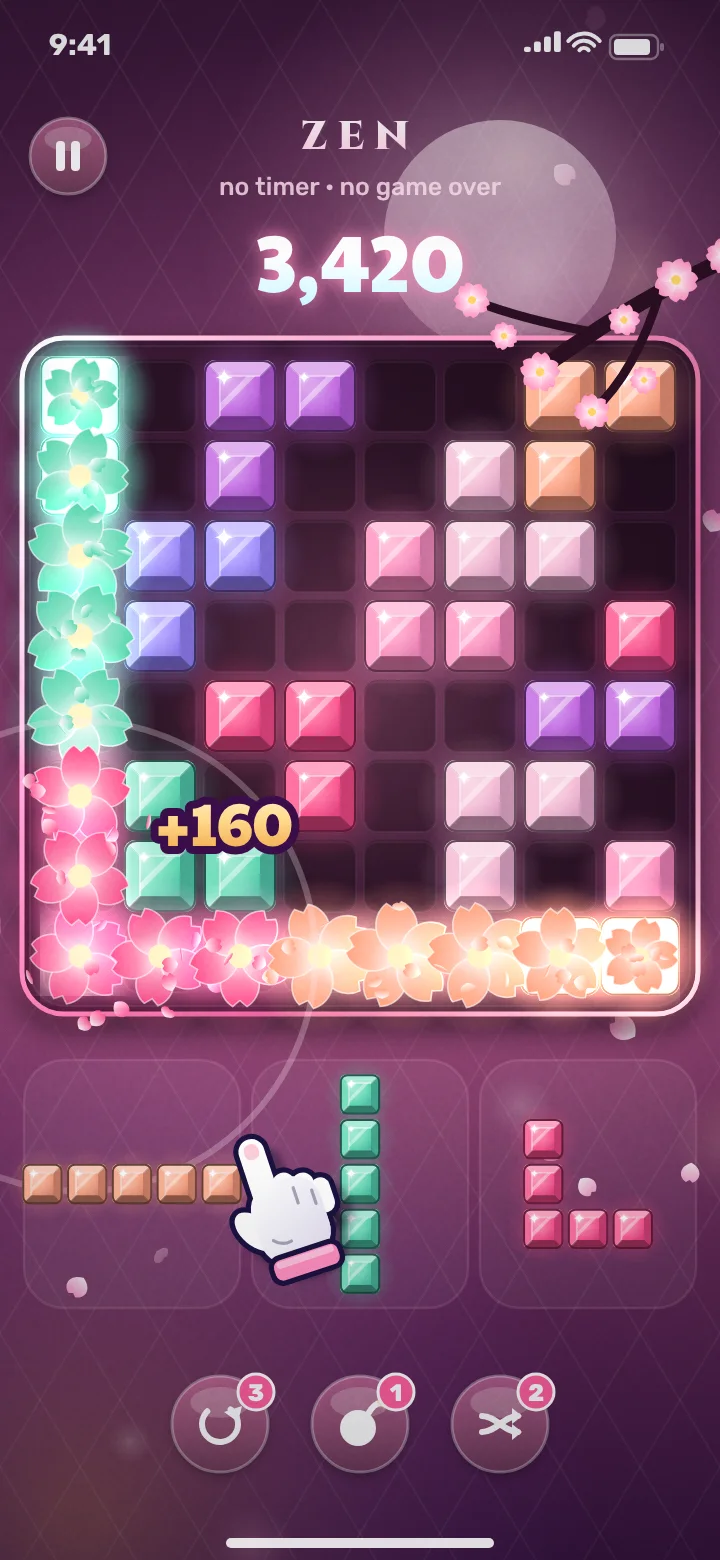
- Pick a material for the blocks: glass, wood, fabric, candy, stone, light.
- Decide what a clear turns into: petals, sparks, water, confetti, notes of music.
- Choose a setting the board sits in, or decide that it floats in nothing on purpose.
- If you have a brand or audience, use its colors and voice, and keep them consistent from icon to results screen.
Is your brief Core-sized?
One board, one rule and one mode fit the $499 Core Game package; the block puzzle game page shows the example concept and what the build includes. If your brief has grown a level mode, a map or a coin economy, read the block puzzle cost comparison before you decide. If you are still choosing between puzzle formats, the puzzle games page lays them side by side, and the game idea quiz gives a quick read on which package fits.
Frequently asked questions
Can I make a game that plays like a famous block puzzle?
Placing pieces to clear lines is shared across the genre, but the name, look, piece style and layout of a specific game are protected expression and branding. Build your own identity and have a lawyer check anything close before launch.
What should a block puzzle brief include?
The board size, piece set, placement and clear rules, feedback for each action, the fail and continue moment, and the game's own name, art and sound. Audience, monetization and launch plans complete it.
Do I need exact numbers in the brief?
No. Give provisional values and say which ones matter to you; the studio tunes grid size, piece weighting and scoring at the playable checkpoint.
Will DFY Games build a clone of an existing game?
No. The studio builds original games with commissioned art and sound, and Apple's guidelines on copycats point the same way.
Is a one-board block puzzle enough for the store?
Many successful block puzzles are one board and one rule with strong feel. Whether yours finds players depends on its identity, quality and launch, and no studio can promise rankings or downloads.
Sources
- Wikipedia, Tetris Holding, LLC v. Xio Interactive, Inc.
- Apple Developer, App Review Guidelines
Written and reviewed by the DFY Games team. Published ; facts checked . Prices and store rules change: check the linked sources before you rely on a figure.