What a merge MVP has to prove
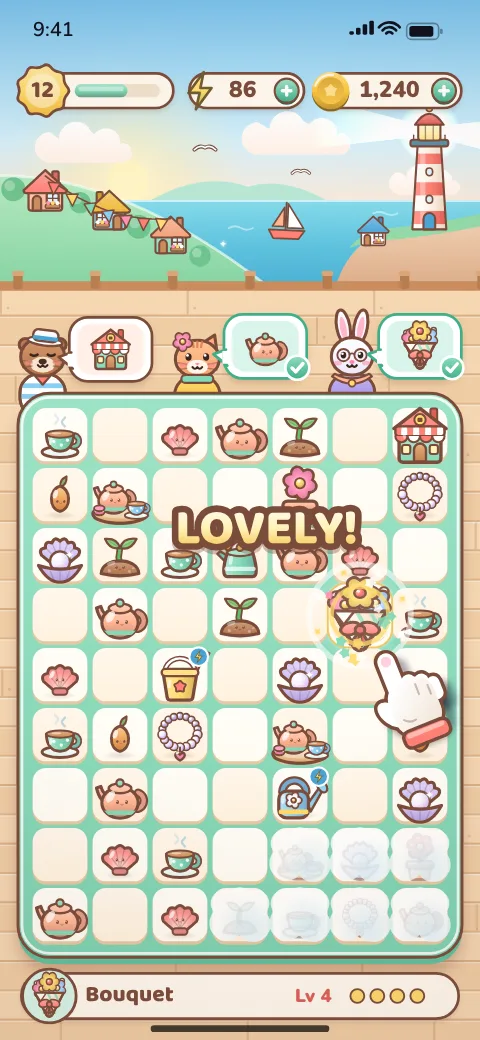
An MVP should answer one question cheaply. For a merge game the question is whether players want "one more order": whether the reveal of the next item and the progress on the map pull them through a session. Quests, inventories and events make a merge game last longer; they do not tell you whether the core is appealing, so they can wait.
One playable merge chain, worked through
Here is a single chain based on our example merge concept. Two identical items merge into the next tier. A seed packet on the board spawns seeds when tapped.
| Tier | Item | Made from | Seeds needed | Used for |
|---|---|---|---|---|
| 1 | Seed | Tap the seed packet | 1 | Merging only |
| 2 | Sprout | 2 seeds | 2 | First order (the tutorial) |
| 3 | Flower pot | 2 sprouts | 4 | Early orders |
| 4 | Bouquet | 2 flower pots | 8 | Mid orders, café customers |
| 5 | Flower basket | 2 bouquets | 16 | Larger orders, restoration steps |
| 6 | Flower stall | 2 baskets | 32 | Final restoration goal for the area |
The doubling column is the useful one for scoping. A tier-6 item takes 32 seeds and 31 merges, so the chain length, the board size and the generator speed together decide how long one area takes. Six tiers on a 7 by 9 board is long enough to feel like progress and short enough to finish, which is what a finite progression path means in practice.
The MVP feature list
- One board with a seed generator
- One complete chain, around six tiers
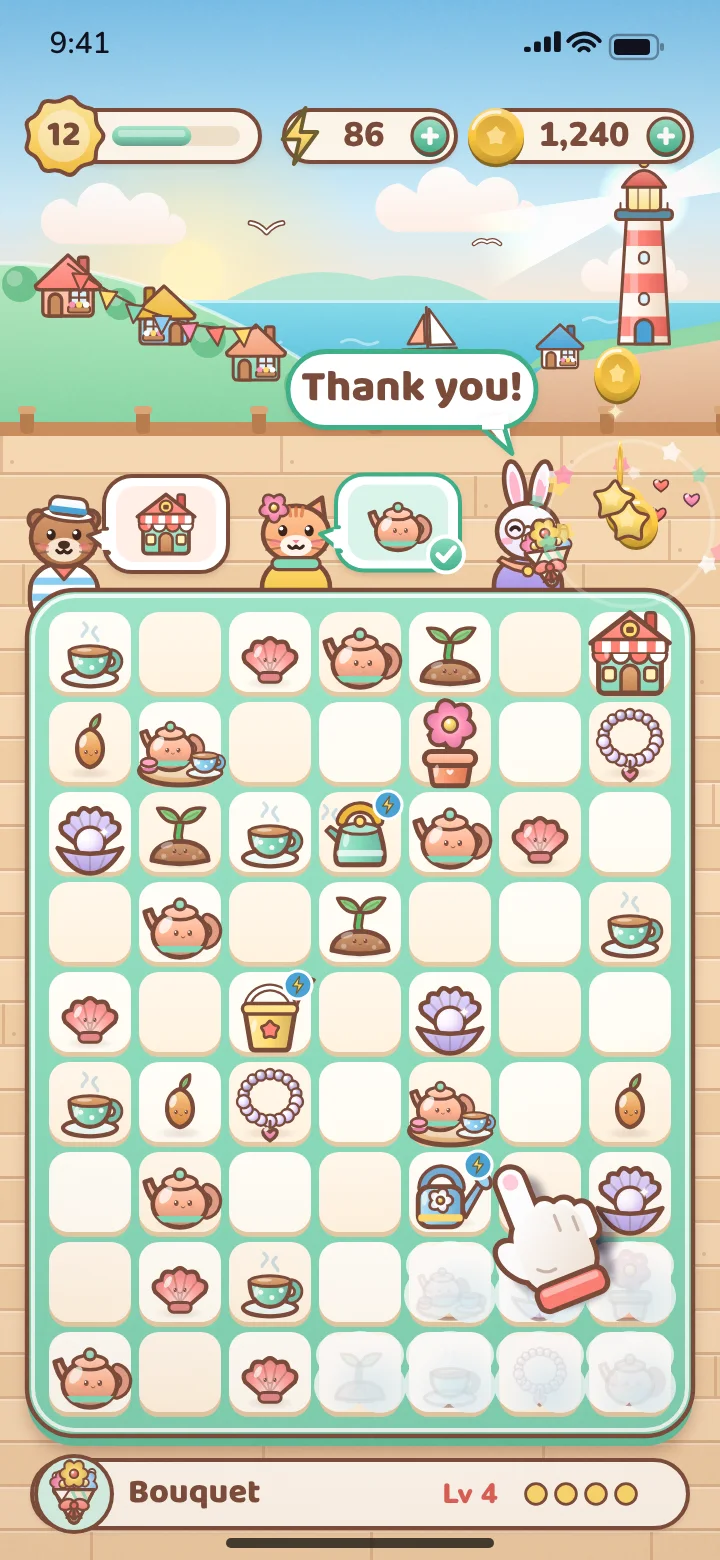
- Orders from customers that pay coins and progress
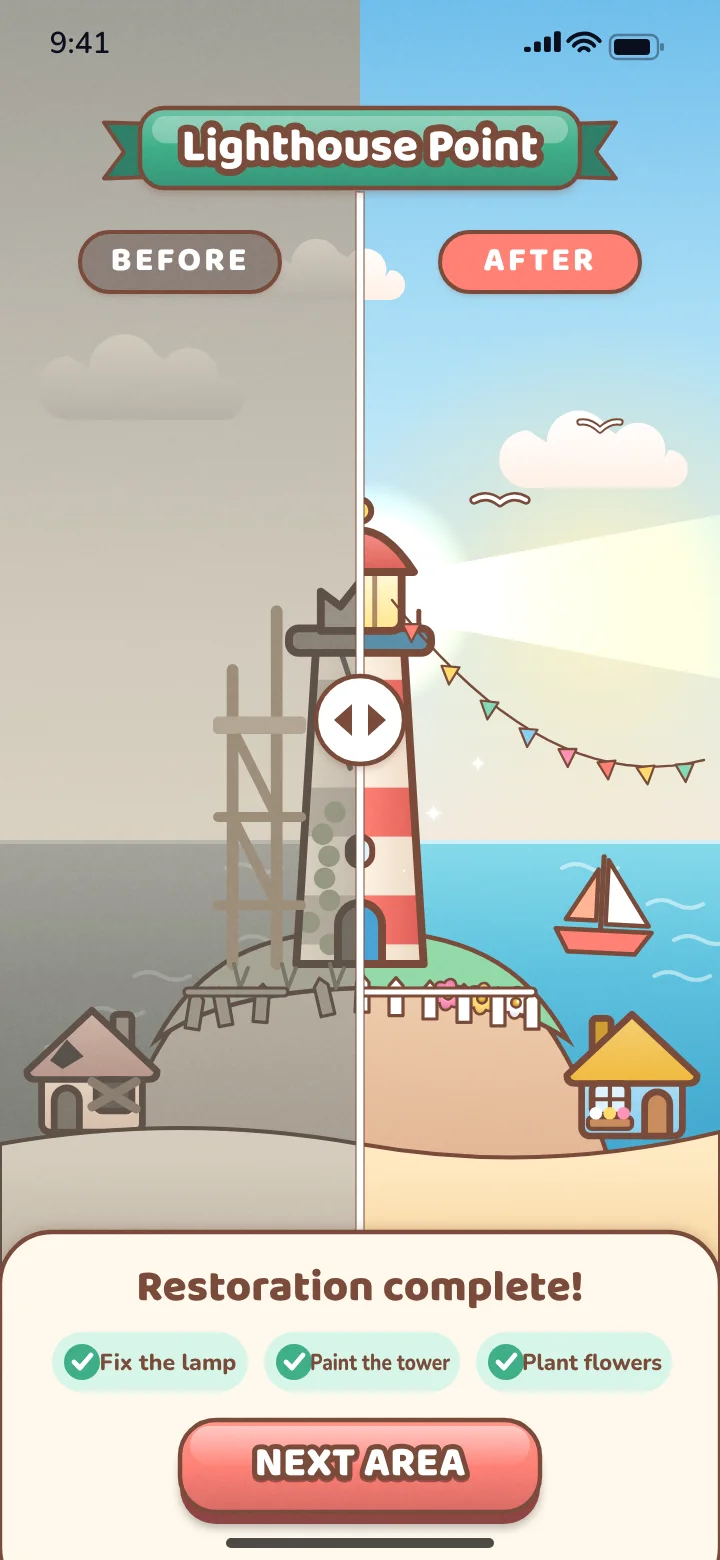
- A finite restoration map for one area, ending in a clear goal
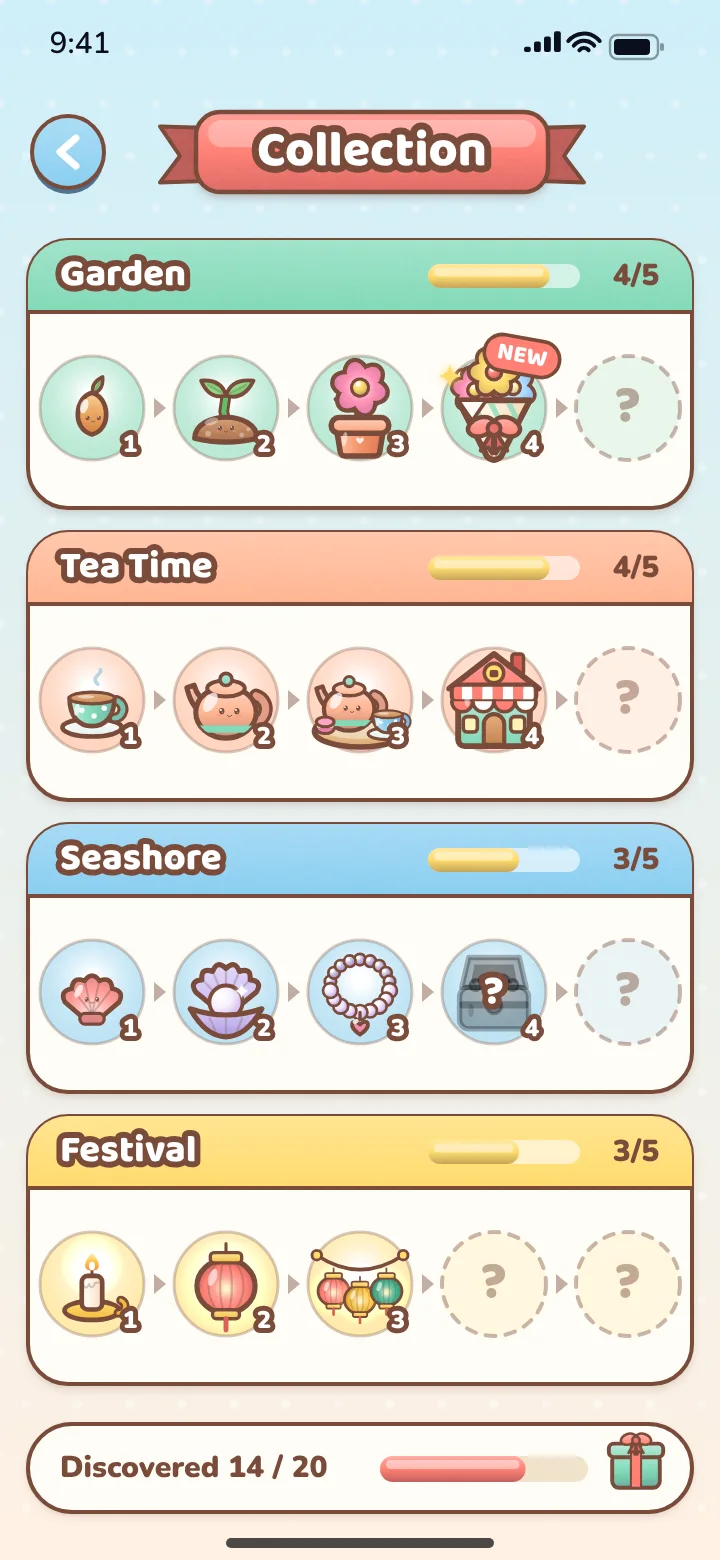
- A collection book for discovered items
- Rewarded ad for a refill or a free spawn, and up to two simple purchases
- Local save, sound, settings and the store kit
The first ten orders
Orders are how a merge MVP teaches the chain without a tutorial screen. The first one should need a single merge, and each later order should ask for something slightly further up the chain.
| Order | Asks for | What it teaches |
|---|---|---|
| 1 | 1 sprout | Tap the generator, merge two seeds |
| 2 | 2 sprouts | Merging is repeatable |
| 3 | 1 flower pot | Merging merged items |
| 4 | 1 flower pot and 1 sprout | Planning across tiers |
| 5 | 1 bouquet | The chain goes further than expected (the reveal) |
| 6 | 2 flower pots | Board space management |
| 7 | 1 bouquet and 1 flower pot | Keeping items aside for later |
| 8 | 1 flower basket | Long merges pay off |
| 9 | 2 bouquets | Pacing before the final goal |
| 10 | 1 flower stall | Area complete; restoration payoff |
Each completed order pays coins that restore part of the town. The sequence above uses 108 seeds in total, so generator speed and the rewarded free-spawn are where session length gets tuned.
Systems to leave out, and what they cost to add
| Excluded system | Why it waits | Route to add it |
|---|---|---|
| Second and third chains | More art and balancing before the first chain is proven | Advanced + Launch |
| Quest lines | Content and tracking that only pay off with returning players | Advanced + Launch |
| Inventory and storage slots | A second item store with its own economy | Advanced + Launch |
| Full energy system with timers | Balancing against purchases needs live data | Advanced + Launch |
| Seasonal events and reward tracks | Ongoing content and usually remote configuration | Separate quote after launch |
| Accounts, cloud save, social features | Needs a backend | Advanced where scoped, or separate quote |
| From | To | Difference |
|---|---|---|
| Core Game ($499) | Core Game + Launch ($1,299) | $800, which adds the 30-day launch package |
| Core Game + Launch ($1,299) | Advanced Game + Launch ($2,999) | $1,700, which buys the more complex game, not more ad management |
| Core Game ($499) | Advanced Game + Launch ($2,999) | $2,500 |
If the blueprint at kickoff shows your idea needs more than the package you bought, you choose: trim it to fit, upgrade for the difference, or take a full refund. Adding systems to a finished game after launch is quoted separately, and since the files are yours after full payment, that work can go to DFY or another developer.
How you will know whether the MVP worked
Be realistic about what a small build can measure. Core includes up to 15 invited playtesters and a feedback summary, which tells you whether the chain is readable and the orders are satisfying. Real player behaviour needs real players: Core + Launch adds 30 days of campaigns and one monetization iteration on early data, which is the cheapest way to see whether strangers come back. Ad spend is paid separately to the ad platforms, and no studio can promise installs or revenue.
For pricing across all merge scopes, see the merge game cost guide. When the chain table above describes your game, the merge game package is the place to start.
Frequently asked questions
What should a merge game MVP include?
One board, one complete merge chain, a generator, orders that use items from the chain, a finite goal and basic monetization. Everything else can be added after players respond.
How many items should the first merge chain have?
Around six tiers works well; with doubling, the top item takes 32 base items, which is enough for a satisfying goal on a small board.
Should a merge MVP have quests and inventory?
No. They extend play time but do not show whether the core loop appeals, and each one is a full system that moves the build to Advanced.
What does it cost to add more chains later?
Moving from Core + Launch to Advanced + Launch at kickoff costs the $1,700 difference; adding systems after launch is quoted separately.
Can an MVP test monetization?
Partly. Core includes rewarded ads and up to two purchases, and Core + Launch adds one monetization iteration based on early campaign data.
Written and reviewed by the DFY Games team. Published ; facts checked . Prices and store rules change: check the linked sources before you rely on a figure.