What an arcade sports brief has to settle
In an arcade sports game the controls are the product. Two games with the same art and the same basketball can feel completely different because one registers a flick on release and the other on swipe distance. A brief that says "swipe to shoot, like basketball" leaves every one of those decisions to the developer, and you find out at the first playable whether you agreed.
Before anything else, write down four things: the one gesture, the one place it happens, the one thing the player is trying to beat (a score, a streak, a clock) and the moment a run ends. If you cannot fill in all four in a sentence each, the idea is not ready for a fixed-price build yet. Our idea quiz is a quick way to test that.
Describe the touch controls as a demo, in words
You do not need a prototype to brief controls. You need a written demo: the first minute of play as the player would experience it, followed by a table that turns each gesture into an input, a result and a piece of feedback. The example below is written for our example arcade sports concept, a one-thumb basketball game.
| Gesture | Input rule | Result in game | Feedback the player gets |
|---|---|---|---|
| Upward flick from the ball | Launch on finger release; ignore swipes under the minimum length | Ball follows an arc toward the hoop | Whoosh sound, light trail on the ball |
| Flick angle | Direction of the last part of the swipe | Sets left or right aim | Arc preview on shots 1-3 only |
| Flick speed | Speed of the swipe, clamped to a minimum and maximum | Sets shot power and height | Ball scale and shadow show height |
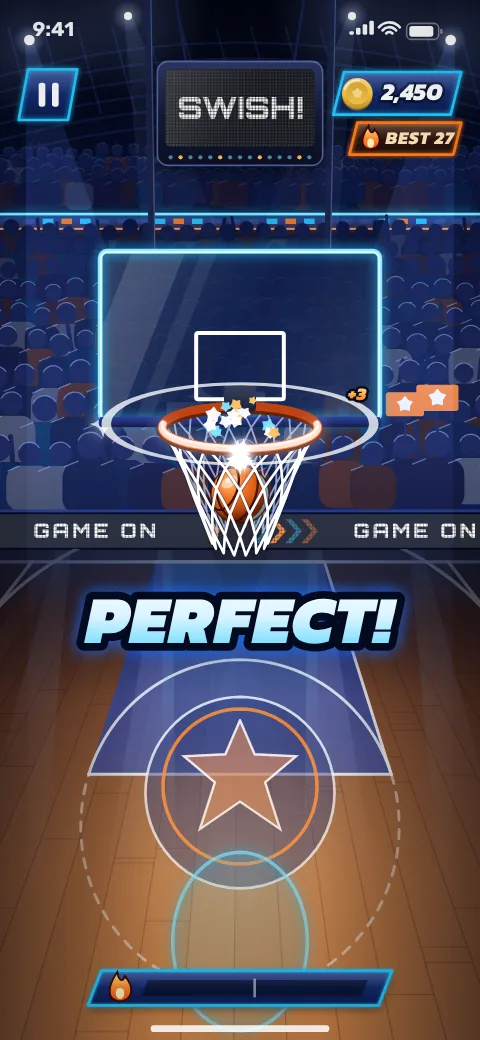
| Clean swish | Ball passes through without touching the rim | +3 and streak multiplier grows | Net ripple, crowd flash, PERFECT label |
| Miss | Ball leaves the play area or stops outside the hoop | Streak ends, run ends | Short groan, retry and rewarded continue buttons |
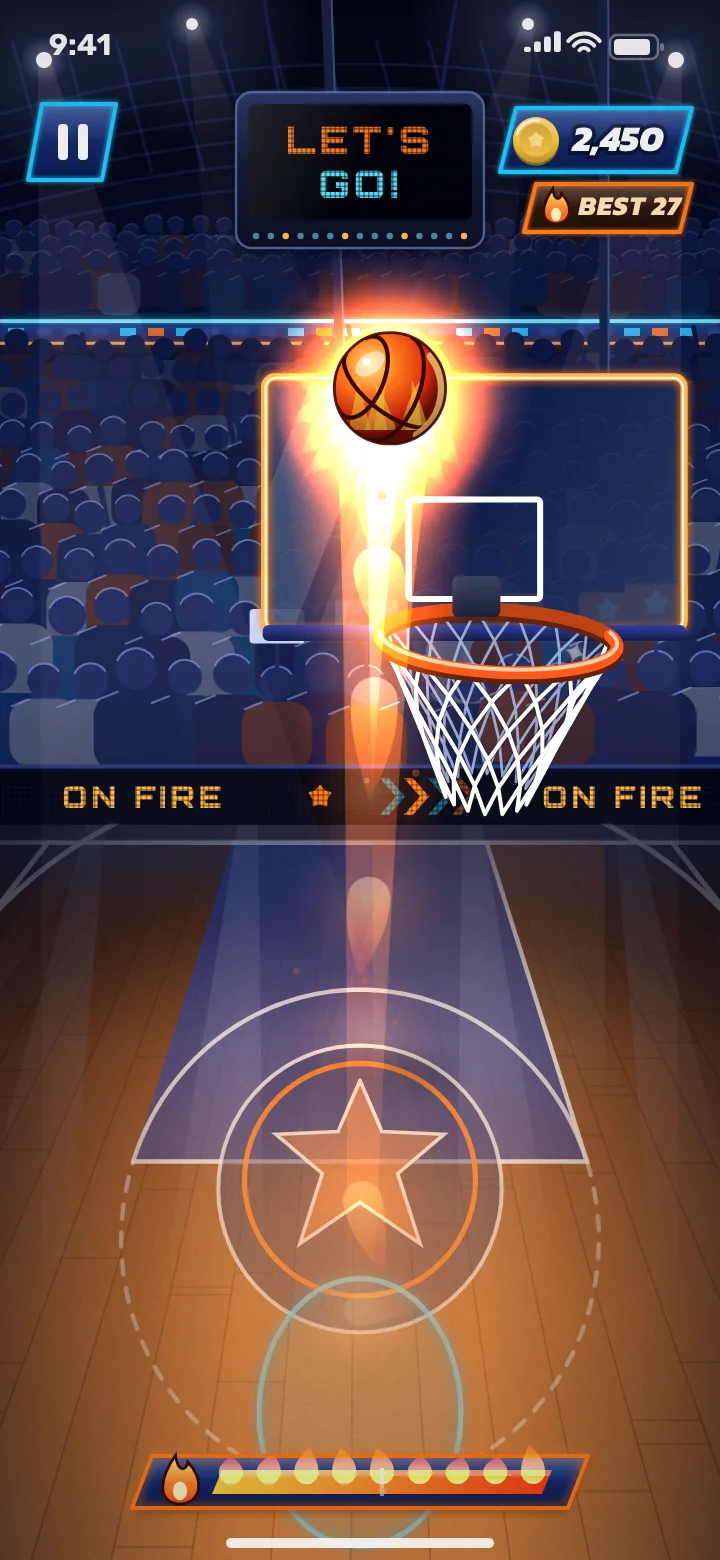
Two notes make a control brief easier to build. Say where the thumb rests (bottom center, bottom right) so the developer can check reach on larger phones. And say what should feel generous: a forgiving rim in the first ten shots, or a strict one from the start. Those choices are tuning, and tuning is exactly what the unlimited refinements inside the approved blueprint are for.
Describing feel without copying another game
References help, as long as you say which part of a reference you mean. "The ball should feel heavy, like it drops faster than it rises" is a usable reference. Asking for a game "like" a named hit is not, because it points at that game's art, UI and branding as much as its feel. Name the quality you like (weight, snappiness, how forgiving the rim is) and describe it in your own words.
Game mechanics themselves are widely shared. Flick-to-shoot basketball is a genre, not anyone's property. What you cannot reuse is another game's name, characters, artwork, sounds or screen layout copied closely enough to be confused with it.
Originality checklist
Before you send the brief
- No real league, competition or tournament names
- No real club or team names, badges, kit designs or color combinations that read as a specific club
- No real player names, faces, numbers tied to a known player, or signature celebrations
- No stadium or arena names that belong to a venue or sponsor
- No broadcaster graphics, score bugs or commentary lines copied from TV coverage
- No characters, art or screen layouts copied from an existing game
- Music and sound are original or come with a license you can show
- The game name has been searched in both app stores and a trademark database for your main markets
If the idea depends on a real league or real players, read the licensing section of the arcade sports cost guide first. Licenses are deals between you and the rights holder and are not part of any package.
Scope checklist for a Core build
Fits the $499 Core Game package if all of these are true
- One sport gesture (shoot, kick, swing or throw), described in a gesture table
- One arena, court or pitch, with cosmetic themes allowed
- One mode with one fail state
- Progression is streak goals, a local best and cosmetic unlocks
- No accounts, no online opponents, no backend
- Monetization is a rewarded continue plus up to two simple purchases
- Opponents, if any, follow simple patterns such as a moving hoop or a goalkeeper that slides
Every "no" on this list is a signal for Advanced Game + Launch at $2,999, which covers two to four connected systems, multiple arenas or modes and broader opponent AI. A cup bracket, a career calendar or characters with stats are the usual reasons. Realtime online matches are a custom quote either way.
What happens after you send it
After payment, the brief becomes a written blueprint that fixes the mechanic, screens, content allowance, art approach and monetization map. For a Core build the playable loop arrives around days 2-3, and that is the moment to judge the feel against your gesture table. Art, sound and progression follow, then device QA and the submission kit, with a submission-ready build targeted within 10 business days after scope lock and complete intake.
The general mobile game brief template covers the parts of a brief that are the same for every genre, such as audience and monetization. When yours is ready, you can start the build and attach it at intake.
Frequently asked questions
Do I need a prototype before briefing an arcade sports game?
No. A written first-minute demo and a gesture table are enough, and the Core prototype around days 2-3 is where the feel gets tested against them.
Can my game look like a real basketball or football league?
It can use the sport, but not a real league's names, badges, kit designs or players without a license from the rights holders.
Can I reference another sports game in my brief?
Yes, if you say which quality you mean, such as ball weight or rim forgiveness. Asking for a copy of another game's art, UI or name is not something we build.
What makes an arcade sports idea too big for Core?
A second mode, several arenas, characters with stats, a season structure or broader opponent AI move it to Advanced; realtime multiplayer needs a custom quote.
Can I change the controls after the first playable?
Yes. Tuning the gesture inside the approved blueprint is part of the unlimited refinements until first submission; adding a new mode or system is a scope change.
Written and reviewed by the DFY Games team. Published ; facts checked . Prices and store rules change: check the linked sources before you rely on a figure.